About 325 minutes
The ghost of Charlotte Cray, and other stories — Reading Companion
Relationships Society Historical Narratives
74,610 recorded words. 23 minutes difference from this book's estimate.
View Gutenberg source #76950
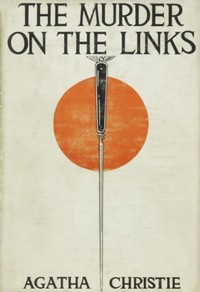
This digital edition of The Murder on the Links — Reading Notes is described by source-level measurements including 69,376 words, 5 hr 2 min estimated reading time, and 30 detected text sections.
The text analysis averages about 11.1 words per sentence, while the detected sections provide another way to judge how the source is divided.
Project Gutenberg metadata also associates the work with “Private investigators -- England -- Fiction,” connecting these edition facts with the source record’s subject description.
Explore this collection
These alternatives are selected using recorded categories and estimated reading time.
About 325 minutes
Relationships Society Historical Narratives
74,610 recorded words. 23 minutes difference from this book's estimate.
View Gutenberg source #76950About 328 minutes
Relationships Society Historical Narratives
75,290 recorded words. 26 minutes difference from this book's estimate.
View Gutenberg source #44083About 336 minutes
Relationships Society Historical Narratives
77,124 recorded words. 34 minutes difference from this book's estimate.
View Gutenberg source #69779Search stored excerpts and compare books → Choose by your preferences →
Choices use stored catalog measurements. Estimates vary with reading speed. A shared category is a catalog label, not a claim that two books have the same argument or literary quality.
Search reads excerpt text stored with this catalog and links to its associated Gutenberg record. The connection is stored in the site database; this tool does not recheck that every excerpt is word-for-word identical to that external record. Excerpt search does not cover every chapter and does not verify historical publication dates.
Catalog snapshot checked: 2026-09-25. Coverage: 98 public books, 98 available source excerpts.
Read the complete public-domain text at its original source.
Read on Project GutenbergFrom its opening line—a young woman exclaiming “Hell!” on a train—The Murder on the Links signals a departure from the drawing-room conventions of the classic detective story. The novel’s structure is built around a series of swift, almost cinematic scene shifts: a chance encounter on the Calais express, a desperate plea at a villa, and the discovery of a body on a golf course. These transitions are not merely decorative; they mirror the story’s central preoccupation with surfaces and hidden identities. The narrative voice, that of Captain Hastings, remains deliberately naïve, allowing Poirot’s observations to emerge as correctives to first impressions. The result is a mystery that continually questions what is seen versus what is true.
The story unfolds across three distinct settings, each with its own atmosphere and narrative function. The opening chapter on the Calais express introduces Hastings’s encounter with a brash young woman—a scene that feels almost self-contained, yet plants clues about disguise and misdirection. The action then moves to the Villa Geneviève, a secluded French estate where the murder victim, Monsieur Renauld, lived. Here, the narrative slows to accommodate interviews and the examination of a locked room. Finally, the scene shifts to the golf links, where a second body is found. This tripartite structure allows Christie to layer her puzzles: the first death appears straightforward, but the second forces a re-evaluation of everything. The links themselves—open, exposed, yet full of hidden hollows—become a metaphor for the story’s deceptions.
Certain details recur with almost talismanic frequency. A woman’s long black hair is found first on an armchair, then on the handle of a dagger. Gloves appear in both murders, preventing fingerprints and emphasizing the killer’s premeditation. More subtly, the novel returns again and again to the idea of masquerade: the victim’s clothing suggests a man trying to pass as someone else; Madame Daubreuil’s past is shrouded in a notorious court case; even the young woman from the train reappears under a different name. These repeated motifs create a texture of suspicion, where every object and every person may be a disguise. Poirot’s method—attending to the “curious irregular marks” others overlook—mirrors the reader’s task of connecting these visual echoes.
Christie controls the flow of information through carefully timed shifts in location. The narrative moves from the claustrophobic interior of the villa to the open air of the golf course, then back to drawing rooms for confrontations. Each change of scene brings a new piece of evidence or a new witness, but also a new layer of confusion. Hastings’s narration often lags behind Poirot’s deductions, so the reader experiences the story as a series of belated realizations. The journey motif—begun on the train—persists: characters arrive and depart, letters are sent, and the final explanation requires a return to the scene of the crime. This restless movement keeps the plot dynamic, preventing any single location from becoming too familiar or too safe.
Captain Hastings serves as more than a Watson-like chronicler. His reactions—shock at the young woman’s language, impatience with Poirot’s delays, eagerness to accept obvious explanations—highlight the detective’s more patient, analytical approach. When Hastings assumes a body fell naturally, Poirot points out the impossibility: “does a man stabbed to the heart fall like that—neatly with his feet together?” The contrast is not merely comic; it dramatizes the novel’s central tension between surface and depth. Hastings sees a pretty face; Poirot sees a powder-covered one. Hastings trusts a calm demeanor; Poirot notes it is “too calm.” Through this partnership, Christie demonstrates how easy it is to be misled by appearances—and how much work is required to see clearly.
Midway through the novel, the narrative pauses for a lengthy flashback to the “Beroldy Case,” a famous French murder trial. This embedded story provides background on Madame Daubreuil and introduces a pattern of deception that echoes the main plot. The Beroldy case involves a woman accused of murdering her husband, a sensational trial, and an acquittal—details that parallel the Renauld murder. By inserting this tale, Christie invites the reader to compare past and present, to look for repeating structures. The flashback also shifts the setting temporarily, breaking the forward momentum of the investigation. It is a structural gamble that pays off by deepening the mystery and suggesting that the current crime may be a repetition of an old one.
Readers approaching The Murder on the Links will find a story that rewards attention to physical detail—the position of a body, the marks on the ground, the texture of a hand. The novel’s structure, with its abrupt scene changes and embedded narratives, mirrors the detective’s own method: moving from one piece of evidence to the next, never settling on a single explanation. Pay particular attention to what characters say about each other, and to what they fail to say. The truth, as Poirot demonstrates, is often hidden in plain sight.
That afternoon, the rain blurred the windows while Poirot shifted between the train, the villa, and those windswept golf links—every scene a mask over another. The layered disguises stayed with me, all that careful concealment. Later, idly, I found myself drifting toward Portland, Oregon, A.D. 1999, and other sketches — Background and Themes, and recognized the same quiet pleasure in peeling back a place’s surface, one gentle layer at a time.
Answer a few questions and save a private reflection on this device.