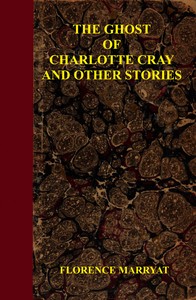
The collection begins with Mr. Sigismund Braggett, a newly married publisher, brooding in his study despite having a thriving business and a beautiful wife. His trouble, we learn, is a secret from his bachelor days: Charlotte Cray. Marryat establishes a voice that is both wry and precise, describing Braggett's wife as a 'beautiful bird of prey' who has wheedled half his secrets from him. The narrative quickly signals that the ghost of the title is not a supernatural apparition but a lingering past relationship, setting a pattern for stories that explore the hauntings of memory and social obligation.
A Narrator Who Watches and Judges
In the second excerpt, the first-person narrator visits his niece Justina and her husband Harry Trevor at a Christmas house party. The narrator is a keen observer, noting Justina's jealousy toward a flirtatious cousin, Lady Amabel Scott. He remarks internally, 'Ho, ho! this is where the shoe pinches,' and reflects that a woman who secures a handsome husband must expect rivals. This framing device—a detached, slightly cynical uncle—allows Marryat to expose domestic tensions without direct commentary. The narrator's judgments are implicit, and readers are invited to read between the lines of polite conversation.
Marital Secrets as Structural Engine
The opening story hinges on what Braggett has not told his wife: 'he had never told her about Charlotte Cray.' Marryat uses the secret as a source of comedy and suspense, describing Braggett's pre-marital efforts to burn letters and erase initials—all in vain. The wife's curiosity is portrayed as insatiable, her 'inventive faculties so correct.' This dynamic recurs in the second excerpt, where Justina claims her husband 'could not keep a secret if he tried,' even as she harbors her own jealous suspicions. The collection appears to test whether openness or concealment better serves marriage.
Social Performance and the Gaze of Others
Both excerpts foreground how characters perform for an audience. Braggett's reverie is observed by no one, yet the narrator describes his appearance—'not a grey hair'—as if cataloging a public persona. At the Trevors' party, guests are introduced through their dress and manner: Lady Amabel with a 'scarlet flower in her hair,' the Misses Rushton as 'pretty' belles. Justina's criticism of Lady Amabel's 'forward, presuming, flirting' behavior reveals her own insecurity. Marryat uses these social tableaux to suggest that domestic harmony is a fragile performance, constantly threatened by the judgments of others.
Echoes Across Stories: Jealousy and the Unspoken
Though the excerpts come from different stories, they share a preoccupation with jealousy and unspoken fears. In the first, Braggett dreads his wife discovering Charlotte Cray; in the second, Justina fears Lady Amabel's allure. The narrator's aside—'Poor Justina! ... she was not above poisoning her life's happiness by a touch of jealousy'—could apply to many characters in the collection. Marryat does not resolve these tensions within the excerpts, leaving readers to wonder whether the ghost of Charlotte Cray will ever be exorcised, or whether Justina's suspicions are justified. The stories seem designed to keep such questions open.
Readers approaching this collection should attend to the gaps between what characters say and what they conceal. Marryat's narrators are unreliable in their own way—sympathetic but limited. The excerpts suggest that the 'ghost' in each story may be a secret, a fear, or a social mask rather than a literal specter. Let the opening tale set your expectations: the supernatural is a metaphor for the past's persistence in domestic life.
Reading about a wife’s jealousy at that Christmas party, I remembered how quietly we all perform our parts at home. Years ago, my own mother once confessed a similar unease over a family photograph—no words, just a glance. The festival — Background and Themes held that same hush, like a room where nothing is said but everything is felt. Some stories simply sit beside you, patient and warm.