About 36 minutes
An Art Shop in Greenwich Village — Background and Themes
Relationships Society Historical Narratives
8,244 recorded words. 6 minutes difference from this book's estimate.
View Gutenberg source #67229
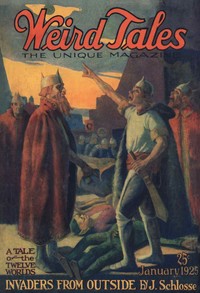
For The festival — Background and Themes, the stored edition analysis reports 6,727 words, 30 min estimated reading time, and 1 detected text section.
The text analysis averages about 27.8 words per sentence, while the detected sections provide another way to judge how the source is divided.
Project Gutenberg metadata also associates the work with “Short stories,” connecting these edition facts with the source record’s subject description.
Explore this collection
These alternatives are selected using recorded categories and estimated reading time.
About 36 minutes
Relationships Society Historical Narratives
8,244 recorded words. 6 minutes difference from this book's estimate.
View Gutenberg source #67229About 40 minutes
Relationships Society Historical Narratives
9,079 recorded words. 10 minutes difference from this book's estimate.
View Gutenberg source #76113About 67 minutes
Relationships Society Historical Narratives
15,295 recorded words. 37 minutes difference from this book's estimate.
View Gutenberg source #49239Search stored excerpts and compare books → Choose by your preferences →
Choices use stored catalog measurements. Estimates vary with reading speed. A shared category is a catalog label, not a claim that two books have the same argument or literary quality.
Search reads excerpt text stored with this catalog and links to its associated Gutenberg record. The connection is stored in the site database; this tool does not recheck that every excerpt is word-for-word identical to that external record. Excerpt search does not cover every chapter and does not verify historical publication dates.
Catalog snapshot checked: 2026-09-25. Coverage: 98 public books, 98 available source excerpts.
Read the complete public-domain text at its original source.
Read on Project GutenbergThe story begins with a precise geographic and temporal setting: the narrator travels through snow toward Kingsport at Yuletide, a festival he insists is older than Christianity. The opening paragraphs establish a layered history—his family came from opiate southern gardens, spoke another tongue, and were commanded to keep festival once a century. The description of Kingsport as "endless labyrinths of steep, narrow, crooked streets" and a burying-ground where "black gravestones stuck ghoulishly through the snow like the decayed fingernails of a gigantic corpse" immediately signals that the landscape itself is ominous.
Lovecraft uses the narrator's heritage to create a sense of compelled return: "I was the only one who came back that night to the old fishing town as legend bade." The reader is positioned to expect a ritual, but the details—four kinsmen hanged for witchcraft, a watch buried in 1698 that later appears on a living relative—suggest the festival involves the dead.
The narrator's family history is not mere background; it drives the plot. He notes that his people "had come as dark, furtive folk from opiate southern gardens of orchids" and "spoken another tongue before they learnt the tongue of the blue-eyed fishers." This foreignness sets them apart from the Puritan settlers. The mention of four kinsmen hanged for witchcraft in 1692 ties the family to historical persecution, and the narrator's ignorance of where they were hanged adds to the unease.
Later, the old man who greets him produces a seal ring and a watch "both with my family arms"—the same watch buried with an ancestor in 1698. This object bridges the centuries, implying that the dead do not stay buried. The narrator's reaction is telling: he shudders, recognizing the watch from old papers. The family crest becomes a mark of doom rather than heritage.
The narrator's perception is consistently questioned. He hears "a distant horrible creaking as of a gibbet in the wind" but sees no gibbet. He describes the old man's face as "a devilish waxen mask," and when the mask is dislodged, he flees into an "oily underground river." The story's end reveals that he was found half-frozen in Kingsport Harbor, clinging to a spar, and that authorities believe he fell over cliffs at Orange Point.
The hospital scene introduces a key ambiguity: the narrator insists the town is wrong—"only about one in five" roofs is ancient, and he hears trolleys and motors. Yet the doctors diagnose a "psychosis" and lend him the Necronomicon. The reader must decide whether the supernatural events occurred or were hallucinations. Lovecraft leaves the question open, as the narrator admits, "There was nothing I could say, because everything was wrong."
The middle of the story (not fully excerpted) likely includes a descent into underground caverns, as the narrator mentions a "stone staircase down which we had come" and an "oily underground river that bubbled somewhere to the caves of the sea." The river is described as "putrescent juice of earth's inner horrors," suggesting a visceral, bodily corruption of the earth itself.
This setting echoes the Necronomicon passage quoted at the end: "The nethermost caverns are not for the fathoming of eyes that see." The river may be the same "secretive, immemorial sea" mentioned in the opening, now revealed as a conduit for the dead. The narrator's escape by flinging himself into it implies that the river leads back to the surface, but at a cost—he emerges in a changed Kingsport.
The final paragraphs introduce a quoted passage from Alhazred's Necronomicon, which the narrator reads at St. Mary's Hospital in Arkham. He claims it is "not new to me" and that he had seen it before, "let footprints tell what they might." This suggests that the events underground may have been a reenactment of the text's warnings.
The quoted passage warns of "dead thoughts live new and oddly bodied" and "things have learnt to walk that ought to crawl." These phrases directly parallel the narrator's encounter with the old man and the "flopping animals" that scratch at lichens. The text functions as a gloss on the story's horrors, implying that the festival is a ritual that animates the dead. Lovecraft uses the excerpt to provide a mythological framework without explaining the events fully, leaving the reader to connect the dots.
Reading The Festival requires attention to the narrator's shifting certainty. The opening establishes a clear, almost nostalgic tone that gradually curdles into horror. Pay particular attention to objects—the watch, the mask, the Necronomicon—that link past and present. The story's brevity (about 30 minutes reading time) rewards rereading, as details like the "twisting willows" and "gibbet" creaking gain new significance after the ending. Consider whether the narrator's final location—a hospital in Arkham—is a refuge or another layer of the nightmare.
Reading this again, I’m back in my grandfather’s lamplit study, the smell of old paper and rain. That ache of returning to a known place, yet finding it strange—the same feeling crept through me while reading The Negro in Literature and Art in the United States — Context and Discussion. Both books hold a mirror to something inherited, half-remembered, and refuse to let the past stay neatly buried.
Save your reaction, strongest insight, and memorable passage.