About 930 minutes
Quo Vadis: A Narrative of the Time of Nero — Background and Themes
Relationships Society Historical Narratives
213,681 recorded words. 101 minutes difference from this book's estimate.
View Gutenberg source #2853
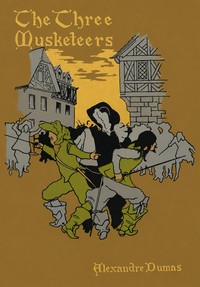
This digital edition of The three musketeers — Context and Discussion is described by source-level measurements including 236,998 words, 17 hr 11 min estimated reading time, and 71 detected text sections.
The text analysis averages about 16.0 words per sentence, while the detected sections provide another way to judge how the source is divided.
Project Gutenberg metadata also associates the work with “Historical fiction,” connecting these edition facts with the source record’s subject description.
Explore this collection
These alternatives are selected using recorded categories and estimated reading time.
About 930 minutes
Relationships Society Historical Narratives
213,681 recorded words. 101 minutes difference from this book's estimate.
View Gutenberg source #2853About 726 minutes
Relationships Society Historical Narratives
166,911 recorded words. 305 minutes difference from this book's estimate.
View Gutenberg source #13102About 666 minutes
Relationships Society Historical Narratives
153,084 recorded words. 365 minutes difference from this book's estimate.
View Gutenberg source #53416Search stored excerpts and compare books → Choose by your preferences →
Choices use stored catalog measurements. Estimates vary with reading speed. A shared category is a catalog label, not a claim that two books have the same argument or literary quality.
Search reads excerpt text stored with this catalog and links to its associated Gutenberg record. The connection is stored in the site database; this tool does not recheck that every excerpt is word-for-word identical to that external record. Excerpt search does not cover every chapter and does not verify historical publication dates.
Catalog snapshot checked: 2026-09-25. Coverage: 98 public books, 98 available source excerpts.
Read the complete public-domain text at its original source.
Read on Project GutenbergThe catalog subjects for The Three Musketeers—historical fiction, France under Louis XIII, adventure, and swordsmen—accurately signal the novel’s surface elements, but the excerpts reveal a more intricate relationship between genre and content. Dumas and Maquet embed political maneuvering and personal vendettas within the swashbuckling action, as seen when D’Artagnan’s pursuit of Milady intertwines with his search for Constance Bonacieux. The narrative voice frequently undercuts heroic postures, as when Athos’s misanthropic remark about women being “not worth the trouble of being sought for” contrasts with D’Artagnan’s romantic determination. This tension between cynicism and idealism shapes the novel’s distinctive tone.
The catalog subject “France – History – Louis XIII, 1610-1643 – Fiction” suggests a backdrop of court politics, but the excerpts show that history functions less as a setting than as a catalyst for personal conflicts. The novel references specific locations—St. Germain, the pavilion where Louis XIV was later born—and period details like the fashion of houses without street-facing windows. However, these details serve to ground D’Artagnan’s private quest rather than to educate readers about the era. The narrative prioritizes the characters’ emotional logic over historical accuracy; for instance, D’Artagnan’s reflection that “the world, being round, has many ends” turns a geographical truism into a metaphor for his aimless search. The historical frame thus provides a plausible stage for melodrama, not a documentary account.
While “Adventure and adventurers – Fiction” implies a straightforward tale of daring deeds, the excerpts complicate this expectation. D’Artagnan’s journey to St. Germain is driven less by a clear mission than by a vague desire to “divert my attention” from his lost love. The adventure is psychological as much as physical: he half-lies to himself, admitting that “by going in search of Milady he at the same time went in search of Constance.” The text also undercuts heroic efficiency through comic interludes, such as Planchet recognizing the lackey Lubin while D’Artagnan does not. These moments remind readers that adventure unfolds through misdirection and chance, not just swordplay. The novel’s episodic structure, evident in the chapter titles, further emphasizes that action is often reactive rather than planned.
The subject “Swordsmen – Fiction” might imply a focus on martial skill, but the excerpts portray the musketeers as defined more by their social roles and personal quirks than by their fighting abilities. Athos’s misanthropy, expressed through his refusal to ride without a horse and his dismissal of women, marks him as a distinct personality rather than a generic swordsman. D’Artagnan’s internal conflict—loving Constance yet pursuing Milady—reveals a character driven by curiosity and pride, not just honor. The dialogue between D’Artagnan and Athos, with its blend of camaraderie and tension, shows that the musketeers’ bond is tested by individual agendas. The novel’s title itself, referring to three distinct figures, signals that swordsmanship is a collective identity shaped by personal differences.
Readers approaching The Three Musketeers should attend to how Dumas and Maquet balance genre conventions with character-driven storytelling. The catalog subjects provide a useful entry point, but the novel’s real interest lies in the gaps between those labels and the text’s actual preoccupations: the psychology of pursuit, the comedy of misrecognition, and the moral ambiguity of loyalty. Treat the historical and adventurous trappings as a stage for more intimate dramas.
Reading about the musketeers’ restless bond, I remembered my father’s worn copy, pages soft as cloth. We never discussed it, but he’d read it aloud on rainy Sundays. That same quiet fellowship of voices—trading stories to pass a plague-ridden night—came back to me while leafing through The Decameron, Volume II — Story, Setting & Ideas. Both worlds feel less like escape, more like sitting close, waiting. The warmth lingers long after the last page settles.
A brief reflection can help important ideas stay with you longer.