Benjamin Brawley’s The Negro in Literature and Art in the United States (1921) opens with a chapter titled “The Negro Genius,” setting a framework that treats each figure as a case study in artistic emergence. The book moves from poet Phillis Wheatley to sculptor Meta Warrick Fuller, with chapters on orators, the stage, painters, and music. Brawley’s method is cumulative: he traces how each artist navigated obstacles and gained recognition, often noting the moment a work was acquired by a major institution or awarded a prize. The structure itself enacts a kind of progress narrative, with later chapters on “General Progress, 1918-1921” and actor Charles S. Gilpin suggesting an ongoing story.
Recurring Images of Light and Threshold
Across the excerpts, Brawley returns to images of light, threshold, and recognition. In the chapter on painter Henry O. Tanner, he describes how “The Resurrection of Lazarus” was bought by the French government and “now hangs in the Luxembourg.” The phrase “now hangs” marks a spatial and symbolic shift from obscurity to institutional display. Later, Brawley notes that Tanner’s “The Annunciation” and “The Resurrection of Lazarus” were both bought by the French government, and “The Two Disciples at the Tomb” by the Chicago Art Institute. These acquisitions function as recurring proof points of arrival. Similarly, the frontispiece shows Charles S. Gilpin as “The Emperor Jones,” a photograph that visually anchors the theme of the black performer stepping into a commanding role. Brawley’s own preface describes his earlier booklet as “privately printed” and “soon exhausted,” a parallel movement from limited circulation to wider acceptance.
Movement Between Scenes: Studio, Salon, and Travel
Brawley’s account of Tanner’s career is structured around a series of movements: from Pittsburgh to Paris, from the studio to the Salon, from Trepied to the Far East, Palestine, Egypt, Algiers, and Morocco. He quotes Miss MacChesney’s description of Tanner’s studio as “high-ceilinged, spacious, and having the least possible furniture,” then immediately shifts to Tanner’s travels. This juxtaposition of settled workspace and peripatetic journeying recurs in the book’s architecture. The chapter on Phillis Wheatley likely traces her movement from Africa to Boston to London; the chapter on Paul Laurence Dunbar from Dayton to literary fame. Brawley himself moved from a 1910 booklet to a 1921 revised edition, a textual journey that mirrors the biographical arcs he charts. The appendix on “The Negro in American Fiction” and “Study of Bibliography” further extends the scope beyond individual lives to a broader literary landscape.
The Prize as Structural Marker
Brawley uses awards and prizes as structural punctuation. In the Tanner section, he lists: “a third-class medal at the Salon in 1897, a second-class medal in 1907, second-class medals at the Paris Exposition in 1900, at the Buffalo Exposition in 1901, and at the St. Louis Exposition in 1904, a gold medal at San Francisco in 1915, the Walter Lippincott Prize in Philadelphia in 1900, and the Harris Prize of five hundred dollars, in 1906.” This accumulation of honors is not mere cataloging; it functions as a rhythm of validation. The preface notes that the earlier edition’s “reception … was even more cordial than I had hoped,” and that “new books and magazine articles were constantly appearing.” The book itself is thus positioned within a network of recognition. Brawley’s method implies that artistic worth is confirmed by institutional acceptance, a theme that unites the disparate chapters.
Voice and the Shift from General to Specific
Brawley’s voice moves between general assertion and specific detail. The opening chapter title “The Negro Genius” is broad, but the subsequent chapters narrow to individuals. In the preface, he states his aim “to treat somewhat more thoroughly than has ever before been attempted the achievement of the Negro … judging this by absolute rather than by partial or limited standards.” This claim of absolute standards is then tested by concrete evidence: the French government’s purchase, the Harris Prize, the description of Tanner’s studio. The chapter on “Orators.—Douglass and Washington” likely pairs two figures for comparative analysis. Brawley’s syntax often builds lists, as in the Tanner awards, creating a cumulative effect. He also incorporates quoted material, such as Miss MacChesney’s description and Tanner’s own words about “the magnificence of two Persian Jews.” These quoted passages break the authorial voice and give texture to the argument.
Readers will benefit from attending to Brawley’s use of institutional markers—prizes, purchases, and public reception—as a thread that connects figures as different as Wheatley and Gilpin. The book’s structure, moving from individual to collective progress, rewards sequential reading, but each chapter can stand alone as a compact biography. The appendix on bibliography offers a path for further study, and the 1921 date places the work at a pivotal moment just after World War I and before the Harlem Renaissance gained full momentum.
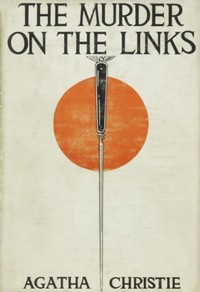
That rainy afternoon, Brawley’s profiles lingered—struggle turning to recognition, always quietly earned. I closed the book and reached for something lighter, yet found myself in a different kind of pursuit, a mystery where identity itself feels like the real crime. Somehow, that fitted. The Murder on the Links — Reading Notes stayed with me the same way: a slow, patient unraveling of who we pretend to be.