About 338 minutes
Tom Tufton's Travels — Inside the Classic
Relationships Society Historical Narratives
77,632 recorded words. 2 minutes difference from this book's estimate.
View Gutenberg source #13404
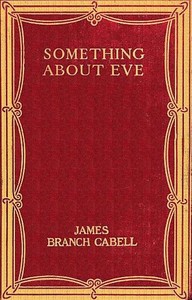
For Something about Eve: A comedy of fig-leaves — Reading Companion, the stored edition analysis reports 77,124 words, 5 hr 36 min estimated reading time, and 10 detected text sections.
The text analysis averages about 22.1 words per sentence, while the detected sections provide another way to judge how the source is divided.
Project Gutenberg metadata also associates the work with “Historical fiction,” connecting these edition facts with the source record’s subject description.
Explore this collection
These alternatives are selected using recorded categories and estimated reading time.
About 338 minutes
Relationships Society Historical Narratives
77,632 recorded words. 2 minutes difference from this book's estimate.
View Gutenberg source #13404About 328 minutes
Relationships Society Historical Narratives
75,290 recorded words. 8 minutes difference from this book's estimate.
View Gutenberg source #44083About 347 minutes
Relationships Society Historical Narratives
79,678 recorded words. 11 minutes difference from this book's estimate.
View Gutenberg source #76442Search stored excerpts and compare books → Choose by your preferences →
Choices use stored catalog measurements. Estimates vary with reading speed. A shared category is a catalog label, not a claim that two books have the same argument or literary quality.
Search reads excerpt text stored with this catalog and links to its associated Gutenberg record. The connection is stored in the site database; this tool does not recheck that every excerpt is word-for-word identical to that external record. Excerpt search does not cover every chapter and does not verify historical publication dates.
Catalog snapshot checked: 2026-09-25. Coverage: 98 public books, 98 available source excerpts.
Read the complete public-domain text at its original source.
Read on Project GutenbergSomething about Eve opens with a tempter and a library, but its comedy quickly settles into a pattern of deflation. The hero, Gerald Musgrave, announces himself as a god with four aspects, heir to unimaginable wonders, yet his audience is a woman darning stockings who responds with placid skepticism. The novel’s subtitle, “A comedy of fig-leaves,” signals a preoccupation with concealment and exposure, and the excerpts bear this out: Gerald’s epic self-narrative is punctured by Maya’s practical interruptions about worn stockings and the need to leave. The book’s twelve-part structure, with titles like “The Book of Outset” and “The Book of Acquiescence,” suggests a journey that may end not in triumph but in resignation.
Gerald’s claim to be “Fair-haired Hoo, the Helper and Preserver, the Lord of the Third Truth” is delivered with expansive confidence, but the narrative undercuts him at every turn. In the excerpt, he describes his summer and winter palaces and the probable personnel of his harem, while Maya “all this while went on darning placidly.” The contrast is stark: one character spins an epic, the other mends socks. Cabell’s dialogue captures this tension with lines like “I am a god,—a god with no less than four aspects,” met by Maya’s reflection that “the gods, as near as she had been able to judge those scatter-brained ne’er-do-wells that went tramping by, were just the same, and, if anything, more so.” The comedy lies in the hero’s inability to impress the one person he needs to convince.
The fig-leaf motif operates on multiple levels. The subtitle points to the biblical fig-leaf as a cover for shame, but in the excerpts, the fig-leaf becomes a metaphor for the stories characters tell to hide their vulnerabilities. Gerald’s tale of his own invincibility is a fig-leaf for his uncertainty; Maya’s darning is a fig-leaf for her refusal to engage with his fantasy. The novel’s argument, set forth in a sonnet, speaks of “the fig-leaf’s trophy with the fig-leaf’s weight,” suggesting that these coverings are both prizes and burdens. The structure itself—a series of books with titles like “The Book of Twilight” and “The Book of Mages”—implies a layered narrative where each section may peel back another layer of pretense. Readers should watch for how characters use stories to shield themselves, and how those stories are inevitably torn.
A persistent pattern in the excerpts is the collision between grand quests and domestic routine. Gerald’s horse, subject to a prophecy, is also a beast that needs to be fed and ridden; Maya’s cottage is a space of housework, not heroics. When Gerald tries to stay for hospitality, Maya insists he leave: “if you for one solitary instant thought I was going to have you hanging about my cottage forever—!” The exchange over stockings—scattered, darned, picked up—grounds the conversation in material reality. Even the horse, which Gerald admits is “not the handsomest beast in the world,” becomes a point of contention. Cabell uses these details to suggest that the heroic journey is always interrupted by the mundane. The novel’s many books and chapters may chart a path through Antan, but the excerpts hint that the real destination is a return to the ordinary.
Readers approaching Something about Eve should attend to the gap between what characters say and what they do. The novel rewards attention to its ironic asides and structural repetitions. The excerpts suggest that Cabell is less interested in the destination—Antan, the goal of all gods—than in the comic friction between aspiration and reality. Watch for how each book rephrases the same tension: a hero with a story to tell, and a world that refuses to listen.
I kept thinking about how Musgrave’s grand quest keeps bumping into mended socks and raised eyebrows. It felt oddly familiar. There’s a tenderness in that collision, the way a dream softens against someone’s simple practicality. It reminded me of something quieter, The festival — Background and Themes, where celebration also carries that whispering undercurrent. Something stays with you after, like a scent in a room you’ve just left.
Your answers remain private and are stored only in this browser.