About 34 minutes
The First — Text and Context
Technology Airships Imagined Futures
7,645 recorded words. 1 minutes difference from this book's estimate.
View Gutenberg source #67316
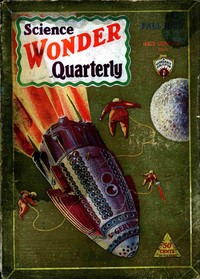
The source record for The artificial man — A Closer Reading measures this digital text at 7,978 words, 35 min estimated reading time, and 1 detected text section.
The text analysis averages about 19.9 words per sentence, while the detected sections provide another way to judge how the source is divided.
Project Gutenberg metadata also associates the work with “Science fiction,” connecting these edition facts with the source record’s subject description.
Explore this collection
These alternatives are selected using recorded categories and estimated reading time.
About 34 minutes
Technology Airships Imagined Futures
7,645 recorded words. 1 minutes difference from this book's estimate.
View Gutenberg source #67316About 33 minutes
Technology Airships Imagined Futures
7,382 recorded words. 2 minutes difference from this book's estimate.
View Gutenberg source #50893About 37 minutes
Technology Airships Imagined Futures
8,320 recorded words. 2 minutes difference from this book's estimate.
View Gutenberg source #64172Search stored excerpts and compare books → Choose by your preferences →
Choices use stored catalog measurements. Estimates vary with reading speed. A shared category is a catalog label, not a claim that two books have the same argument or literary quality.
Search reads excerpt text stored with this catalog and links to its associated Gutenberg record. The connection is stored in the site database; this tool does not recheck that every excerpt is word-for-word identical to that external record. Excerpt search does not cover every chapter and does not verify historical publication dates.
Catalog snapshot checked: 2026-09-25. Coverage: 98 public books, 98 available source excerpts.
Read the complete public-domain text at its original source.
Read on Project GutenbergThe story opens not with action but with a speculative essay on surgical replacement, citing a cat with an artificial rubber heart. This clinical frame gives way to the tale of George Gregory, a college athlete and debater who argued that 'bodily perfection is a result of right thinking.' The Thanksgiving football game that costs him a leg becomes the pivot from intellectual confidence to physical ruin. Harris uses this contrast between abstract theory and bodily consequence to set up the central tension: a mind that believed it could control matter now finds itself at the mercy of mechanical parts.
The early pages establish Gregory through his own words and others' recollections. He is described as 'masterful' and 'dominating,' traits that the narrative will later render sinister. The debate topic—'Resolved that bodily perfection is a result of right thinking'—is not mere background; it becomes the story's philosophical engine. Gregory's belief in mental control over physical fate is tested when he is carried off the field unconscious. The amputation is reported with clinical brevity: 'his right leg was amputated just below the h...' The excerpt cuts off, but the trajectory is clear. Harris does not dwell on the surgery; instead, she lets the gap between Gregory's earlier confidence and his sudden vulnerability create unease.
When Gregory reappears as the 'artificial man,' the narrative voice shifts to David Bell's horrified perspective. Gregory demonstrates his mechanical body by dismembering himself, then explains: 'With the exception of the right arm I now move my body by electricity.' The control board on his chest becomes a focal point—a vulnerability that Bell later tries to exploit. Harris emphasizes the clock-like precision of Gregory's movements and the 'metallic fingers' that grip like a vise. The prose becomes more visceral: 'Down, down, those relentless claws bore him.' The earlier abstract discussion of replacement organs is now embodied in a predator. The pacing accelerates as Bell struggles against an opponent whose parts can be 'mended and replaced' like an automobile.
The final excerpted section shifts to a recovery scene. Bell wakes to find Rosalind and Lucius Stevens at his bedside. Stevens recounts the rescue: he alerted police, who arrived with 'automatics and crow-bars.' The rescue is told in past tense, creating distance from the earlier immediacy. Harris uses this retrospective narration to frame the artificial man as a 'demon' and a 'self-made Frankenstein.' The phrase echoes the story's title and reinforces the moral: Gregory's hubris has created a monster. The pacing slows again, but the threat lingers. The excerpt ends with Stevens saying he will 'never forget the sight,' leaving the reader with the sense that the horror is not yet contained.
Harris's story moves through three distinct registers: a speculative essay on medical progress, a character study of a brilliant but arrogant young man, and a horror narrative about a mechanical predator. The shifts in pace—from measured exposition to sudden violence to reflective aftermath—mirror the theme of control lost and regained. Readers should attend to how the narrator's voice changes: the early clinical tone gives way to Bell's visceral fear, then to Stevens's grim summary. The artificial man is less a character than a consequence, and the story's power lies in watching that consequence unfold.
There’s a particular ache in The Artificial Man when the student’s metal body starts humming its own quiet song. It reminded me of the steady hiss of steam in the old Frank Reade, Jr., With His New Steam Man in Central America — Reading Companion, where machinery feels less like horror and more like a patient, iron-fisted companion. Both linger on what we lose when we let things carry us.
Answer a few questions and save a private reflection on this device.