About 23 minutes
Blank? — Story, Setting & Ideas
Technology Airships Imagined Futures
5,263 recorded words. 6 minutes difference from this book's estimate.
View Gutenberg source #71525
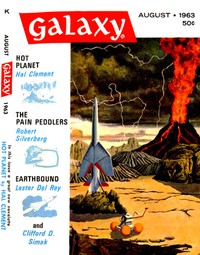
The catalog record for Earthbound — Inside the Classic provides practical reading context through 3,717 words, 17 min estimated reading time, and 1 detected text section.
The text analysis averages about 20.7 words per sentence, while the detected sections provide another way to judge how the source is divided.
Project Gutenberg metadata also associates the work with “Science fiction,” connecting these edition facts with the source record’s subject description.
Explore this collection
These alternatives are selected using recorded categories and estimated reading time.
About 23 minutes
Technology Airships Imagined Futures
5,263 recorded words. 6 minutes difference from this book's estimate.
View Gutenberg source #71525About 24 minutes
Technology Airships Imagined Futures
5,509 recorded words. 7 minutes difference from this book's estimate.
View Gutenberg source #50959About 24 minutes
Technology Airships Imagined Futures
5,462 recorded words. 7 minutes difference from this book's estimate.
View Gutenberg source #59394Search stored excerpts and compare books → Choose by your preferences →
Choices use stored catalog measurements. Estimates vary with reading speed. A shared category is a catalog label, not a claim that two books have the same argument or literary quality.
Search reads excerpt text stored with this catalog and links to its associated Gutenberg record. The connection is stored in the site database; this tool does not recheck that every excerpt is word-for-word identical to that external record. Excerpt search does not cover every chapter and does not verify historical publication dates.
Catalog snapshot checked: 2026-09-25. Coverage: 98 public books, 98 available source excerpts.
Read the complete public-domain text at its original source.
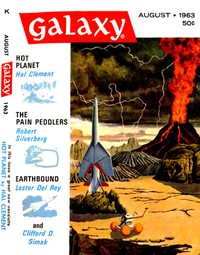
Read on Project GutenbergLester Del Rey's 'Earthbound' opens with Captain Clifton, a deepspace hero fresh from the Regulation of Rigel, trapped at a ceremony for Space Products Unlimited's centennial. He escapes to a balcony, where he meets an old man who has spent fifty years making space boots—and has never left Earth. The old man's whispered litany of stars ('Aldebaran, Sirius, Deneb, Alpha Centauri') and his admission that he 'failed the early rigid physicals' establish a poignant contrast between Clifton's freedom and the cobbler's confinement. The excerpt ends with Clifton impulsively offering the old man a spare cabin on his ship, setting the story in motion.
The story's first pages establish a stark opposition between Clifton and the old cobbler. Clifton is a celebrated spacefarer who 'wanted above anything else to go into space' and has 'just finished the Regulation of Rigel.' The old man, by contrast, has spent his entire life on Earth, making boots for others to travel. His voice is 'high-pitched with an odd accent,' and his face is hidden behind 'dark glasses' and a 'long beard.' Del Rey uses the balcony setting—a liminal space between the crowded ceremony and the open sky—to stage their encounter. The old man's list of stars is not just a recitation; it is a 'poetry of ancient yearning,' a verbal gesture that links him to a tradition of longing. Clifton's pity, described as 'pity and impulse,' leads him to offer a cabin on the Maryloo, a decision that feels both generous and reckless. The excerpt does not reveal whether the old man accepts, but the offer itself shifts the story's trajectory from complaint to action.
As the story progresses, the focus narrows to the relationship between Clifton and the old man. The cobbler's backstory—his failed attempts to leave Earth, thwarted by a plague, a strike, and an explosion—paints him as a figure of persistent bad luck. Del Rey's prose is economical, using short sentences to convey the old man's weariness: 'So I stayed, making space boots.' The middle section likely tests Clifton's impulsive offer, forcing him to confront the practical and emotional consequences of taking a stranger into space. The old man's gratitude is 'oddly gentle,' but his grip on Clifton's arm suggests desperation. The excerpt does not specify the outcome, but the tension between Clifton's desire to help and the old man's history of disappointment creates a narrative engine. Readers should watch for how Del Rey balances the cobbler's vulnerability with hints of something more—perhaps a hidden motive or a supernatural element, given the story's catalog subject 'Wandering Jew.'
Later portions of the text, though not fully excerpted, appear to move from realistic dialogue toward a more speculative register. The old man's laugh is described as 'harsh,' and his comment that 'time means nothing to me' hints at an ageless quality. The catalog lists 'Wandering Jew' as a subject, suggesting that the cobbler may be more than a failed space traveler—perhaps a figure cursed to wander Earth forever. Del Rey's use of the name 'Clifton' (a common surname) and the old man's anonymity (he is never named in the excerpt) reinforces the archetypal nature of their encounter. The later sections likely explore the implications of the old man's true identity, if indeed he is the Wandering Jew. Readers should note how the story's tone shifts from the opening's bitter realism to something more mythic, and how Del Rey integrates this supernatural element without abandoning the story's grounding in space-age technology.
At just over 3,700 words, 'Earthbound' is a compact narrative that relies on dialogue and interiority. Del Rey uses Clifton's point of view to filter the old man's story, but the cobbler's voice—'high-pitched' and accented—dominates their exchanges. The story's structure is linear, moving from the ceremony to the balcony to the offer, but the old man's monologue introduces a recursive element, as he recounts his repeated failures. Del Rey's prose is plain, with few metaphors, but the recurring image of stars—'a billion up there among the stars'—anchors the theme of longing. The story's brevity means every detail carries weight: the 'gold watch' given to the cobbler, the 'cheap world cruise ticket,' the 'spare cabin' on the Maryloo. Readers should pay attention to how Del Rey uses these concrete objects to symbolize larger desires and disappointments. The story's ending, though not excerpted, likely resolves the tension between Clifton's offer and the old man's fate.
As you read 'Earthbound,' note how Del Rey builds a complete narrative in a few thousand words. The story's power lies in its restraint: the old man's past is sketched in a few sentences, and Clifton's motives are left ambiguous. Pay attention to the balance between the realistic setting (a spaceport ceremony) and the mythic undertones (the Wandering Jew). The story rewards close reading of its dialogue and small details.
I keep thinking about that old cobbler in Earthbound, how he’d stopped looking up at all. There’s a similar ache in The Moon Maid — A Closer Reading, though it turns the longing outward, toward a sky that answers back. Both left me with the same quiet feeling—that distance can be a home of its own.
Capture what you thought, learned, and would like to remember.