About 24 minutes
End as a World — Context and Discussion
Technology Airships Imagined Futures
5,509 recorded words. 1 minutes difference from this book's estimate.
View Gutenberg source #50959
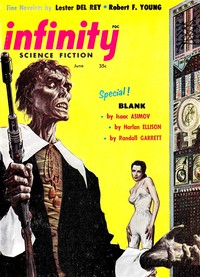
For Blank? — Story, Setting & Ideas, the stored edition analysis reports 5,263 words, 23 min estimated reading time, and 1 detected text section.
The text analysis averages about 15.8 words per sentence, while the detected sections provide another way to judge how the source is divided.
Project Gutenberg metadata also associates the work with “Short stories,” connecting these edition facts with the source record’s subject description.
Explore this collection
These alternatives are selected using recorded categories and estimated reading time.
About 24 minutes
Technology Airships Imagined Futures
5,509 recorded words. 1 minutes difference from this book's estimate.
View Gutenberg source #50959About 24 minutes
Technology Airships Imagined Futures
5,462 recorded words. 1 minutes difference from this book's estimate.
View Gutenberg source #59394About 26 minutes
Technology Airships Imagined Futures
5,909 recorded words. 3 minutes difference from this book's estimate.
View Gutenberg source #65378Search stored excerpts and compare books → Choose by your preferences →
Choices use stored catalog measurements. Estimates vary with reading speed. A shared category is a catalog label, not a claim that two books have the same argument or literary quality.
Search reads excerpt text stored with this catalog and links to its associated Gutenberg record. The connection is stored in the site database; this tool does not recheck that every excerpt is word-for-word identical to that external record. Excerpt search does not cover every chapter and does not verify historical publication dates.
Catalog snapshot checked: 2026-09-25. Coverage: 98 public books, 98 available source excerpts.
Read the complete public-domain text at its original source.
Read on Project GutenbergRandall Garrett's "Blank?" opens with a journalist, Bethelman, coming to on a Manhattan street corner, disoriented and missing two weeks of memory. The narrative immediately establishes a clipped, internal voice—Bethelman's thoughts are fragmented, punctuated by dashes and short questions: "What the hell had happened?" The story's pace mirrors his confusion, jumping from a Boston bar to a New York phone booth within paragraphs. A call to his editor reveals that only half an hour has passed for others, while Bethelman has lost fourteen days. This temporal dislocation is the story's engine, and Garrett sustains it through terse dialogue and Bethelman's obsessive checking of details—his watch, a newspaper date, his bank balance.
Garrett uses dialogue to amplify Bethelman's fractured sense of time. When he calls his editor, Hickman's casual response—"You've only been gone half an hour"—contrasts sharply with Bethelman's internal panic. The editor's offhand remark about a horse race tip, "Who'd have thought Baby Joe would come in first?," hints at actions Bethelman cannot recall. The barman's laconic confirmation of the date, "Fifteenth, I think," delivered while polishing a glass, underscores the mundane world's indifference to Bethelman's crisis. These exchanges are economical, each line advancing the mystery without exposition.
The title "Blank?" refers both to Bethelman's amnesia and to a narrative gap that Garrett refuses to fill. The story withholds any flashback or explanation for the missing two weeks; Bethelman's memory is a "perfect blank." Instead, the narrative moves forward through his attempts to reconstruct events—checking his watch, his pocket, his bank account. The reader is confined to his limited perspective, experiencing the same disorientation. This structural choice creates a taut, puzzle-box quality, where the missing time becomes more significant than any revealed detail.
The story's pace is tightly bound to its New York setting. Bethelman moves through specific locations—44th Street and Madison Avenue, a bar near Grand Central, a phone booth—each rendered in quick, functional prose. The city is a backdrop of anonymous bustle: "no one pays any attention to anyone on the streets of New York." This anonymity amplifies Bethelman's isolation. Garrett's sentences are short, often beginning with action: "He went in and ordered a beer." The rhythm mimics a journalist's note-taking, efficient and detached, until a sudden revelation—the $50,000—jolts the pace into a new gear.
Readers attuned to mid-century science fiction will recognize the story's debt to the amnesia trope, but Garrett's execution is notably restrained. He trusts the reader to piece together clues from Bethelman's fragmented observations. Pay attention to small details—the bank balance, the horse race tip, the bartender's casual remark—as they may hold the key to the blank. The story rewards close rereading, especially of its opening paragraphs, where the disorientation is most acute.
The rain that afternoon blurred the windows as I turned the last pages of Blank?, haunted by how easily a life can be rewritten in memory’s gaps. Sitting there, I found myself reaching for The first American King — Key Ideas to Explore, wondering how a nation’s identity might slip just as quietly. Some things stay unsettled unless we really sit with them, I suppose.
Your answers remain private and are stored only in this browser.