About 24 minutes
End as a World — Context and Discussion
Technology Airships Imagined Futures
5,509 recorded words. 2 minutes difference from this book's estimate.
View Gutenberg source #50959
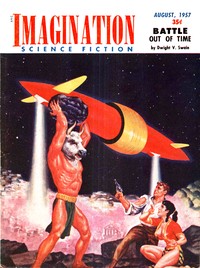
The catalog record for Reality Unlimited — A Closer Reading provides practical reading context through 5,909 words, 26 min estimated reading time, and 1 detected text section.
The text analysis averages about 14.9 words per sentence, while the detected sections provide another way to judge how the source is divided.
Project Gutenberg metadata also associates the work with “Science fiction,” connecting these edition facts with the source record’s subject description.
Explore this collection
These alternatives are selected using recorded categories and estimated reading time.
About 24 minutes
Technology Airships Imagined Futures
5,509 recorded words. 2 minutes difference from this book's estimate.
View Gutenberg source #50959About 24 minutes
Technology Airships Imagined Futures
5,462 recorded words. 2 minutes difference from this book's estimate.
View Gutenberg source #59394About 23 minutes
Technology Airships Imagined Futures
5,263 recorded words. 3 minutes difference from this book's estimate.
View Gutenberg source #71525Search stored excerpts and compare books → Choose by your preferences →
Choices use stored catalog measurements. Estimates vary with reading speed. A shared category is a catalog label, not a claim that two books have the same argument or literary quality.
Search reads excerpt text stored with this catalog and links to its associated Gutenberg record. The connection is stored in the site database; this tool does not recheck that every excerpt is word-for-word identical to that external record. Excerpt search does not cover every chapter and does not verify historical publication dates.
Catalog snapshot checked: 2026-09-25. Coverage: 98 public books, 98 available source excerpts.
Read the complete public-domain text at its original source.
Read on Project GutenbergRobert Silverberg's 1957 story opens with a line eight blocks long—a queue of people waiting for tickets to Ultrarama, a film process advertised as 'realer than life.' The protagonist, Paul Hendriks, has been in line since early the previous morning, sustained by sandwiches and coffee brought by his wife. The story immediately establishes a contrast between the public's eager anticipation and the skepticism of those closest to the event. Hendriks's wife questions whether the show can be worth the hype, while he insists it will be 'the greatest ever.' This tension between marketed promise and personal doubt runs through the narrative, as the technology's immersive power proves overwhelming.
The story pays careful attention to the logistics of attending Ultrarama. Tickets cost twenty dollars—a significant sum—and are delivered as 'costly-looking sumptuous engraved invitations' rather than ordinary pasteboards. The theater itself is specially built, seating five thousand, yet the line stretches eight blocks. Silverberg emphasizes the physical and financial investment required: Hendriks waits overnight, his wife brings supplies, and the couple must navigate a crowd that includes 'pretty near-nude usherettes.' The setting is a future 1973, with 'quiktrans' transportation and jetcabs, but the mundane details of waiting, spending, and hoping anchor the speculative premise in recognizable human behavior.
The experience of Ultrarama itself is described through its aftereffects. After the first part of the program, Hendriks and his wife emerge 'utterly beaten,' with other audience members in states ranging from 'glassy-eyed exhaustion to complete nervous breakdown.' Hendriks's nerves are 'quivering like overtaut harp strings.' The story does not depict the film's content directly; instead, it focuses on the physical and psychological toll. The promise of 'realer than life' becomes a threat, as the simulation proves too intense. Silverberg uses the characters' reactions to imply the technology's power without needing to describe the spectacle itself.
The story's resolution is a retreat from the simulated into the ordinary. Hendriks flees the theater, hails a jetcab, and announces his plan: 'a nice calming shower, a sedative, and get in bed. Then I'm going to read a nice quiet book.' His wife agrees, adding, 'That's real enough for me.' The final line underscores the irony: the technology designed to surpass reality drives the characters back to the simplest forms of it. Silverberg leaves the reader with a pointed contrast between the marketed 'last word in theatre fun' and the actual experience, which leaves its audience seeking refuge in the mundane.
The story's brevity—under six thousand words—allows Silverberg to focus tightly on a single evening and a single technological marvel. Readers may note how the narrative withholds the actual Ultrarama experience, showing only its effects. This restraint creates a sense of dread and curiosity. The story rewards attention to small details: the shift from tickets to invitations, the wife's early skepticism, the driver's casual enthusiasm. These elements build a world where the line between entertainment and endurance blurs.
There’s something haunting about how Ultrarama promised us everything and left Paul Hendriks hollowed out. I kept thinking about that exhaustion long after finishing the story, and it drifted me back to a slender old edition some friend pressed on me years ago, Be young again! — Edition Insights. We chase these bright fixations, don’t we, only to find the ache was part of the view.
Answer a few questions and save a private reflection on this device.