About 389 minutes
A fighting man of Mars — A Closer Reading
Technology Airships Imagined Futures
89,296 recorded words. 28 minutes difference from this book's estimate.
View Gutenberg source #70691
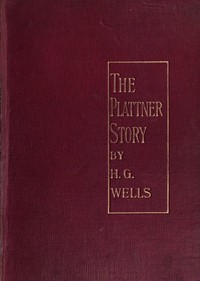
For The Plattner Story, and Others — Reading Companion, the stored edition analysis reports 83,003 words, 6 hr 1 min estimated reading time, and 8 detected text sections.
The text analysis averages about 16.9 words per sentence, while the detected sections provide another way to judge how the source is divided.
Project Gutenberg metadata also associates the work with “Science fiction,” connecting these edition facts with the source record’s subject description.
Explore this collection
These alternatives are selected using recorded categories and estimated reading time.
About 389 minutes
Technology Airships Imagined Futures
89,296 recorded words. 28 minutes difference from this book's estimate.
View Gutenberg source #70691About 308 minutes
Technology Airships Imagined Futures
70,818 recorded words. 53 minutes difference from this book's estimate.
View Gutenberg source #70816About 414 minutes
Technology Airships Imagined Futures
95,114 recorded words. 53 minutes difference from this book's estimate.
View Gutenberg source #72226Search stored excerpts and compare books → Choose by your preferences →
Choices use stored catalog measurements. Estimates vary with reading speed. A shared category is a catalog label, not a claim that two books have the same argument or literary quality.
Search reads excerpt text stored with this catalog and links to its associated Gutenberg record. The connection is stored in the site database; this tool does not recheck that every excerpt is word-for-word identical to that external record. Excerpt search does not cover every chapter and does not verify historical publication dates.
Catalog snapshot checked: 2026-09-25. Coverage: 98 public books, 98 available source excerpts.
Read the complete public-domain text at its original source.
Read on Project GutenbergThe narrator of “The Plattner Story” opens with a cagey disclaimer: he counts seven witnesses, “six and a half pairs of eyes, and one undeniable fact,” yet still finds the tale preposterous. That fact—the inversion of Gottfried Plattner’s internal organs after a mysterious explosion—is the kind of concrete, weird evidence Wells often plants at the center of his stories. The collection that follows, published in 1897, contains seventeen pieces that move between science fiction, horror, and social comedy, but nearly all share a fascination with how ordinary people react when the rules of the world suddenly change.
Wells repeatedly frames his most outlandish events through the language of testimony and doubt. In “The Plattner Story,” the narrator insists he is telling the story “without further comment” after listing reasons to disbelieve it. The result is a paradox: the more carefully he hedges, the more the reader is drawn into the puzzle. A similar tactic appears in “The Red Room,” where a young man’s rational confidence is dismantled by an unseen presence. The story never names the haunting; it simply records his growing terror through short, breathless sentences. Wells uses this technique to make the impossible feel like a problem of evidence rather than a flight of fancy.
Several stories end with an act of violence that solves nothing. In “Pollock and the Porroh Man,” the protagonist has a witch doctor killed, but the severed head continues to glare at him “upside down, but glaring hard.” The head rolls into a corner, is kicked, and still returns to the same position. Pollock’s attempt to buy his way out of a curse only tightens it. “The Cone” builds toward a murder that is both brutal and strangely clinical, described with the same detached precision Wells applies to a geological formation. These endings refuse catharsis; they leave the reader with an image that lingers because it is not explained away.
Wells often grounds his fantastic premises in tiny, physical observations. Plattner’s face is “not absolutely symmetrical, his right eye a little larger than the left.” The narrator of “The Plattner Story” notes this as if it might be a clue, but it never becomes one—it simply makes Plattner more real. In “The Argonauts of the Air,” the description of a flying machine focuses on its “wheels and springs and screws” rather than its grandeur. Even in the most supernatural tales, Wells keeps his eye on the material world: the red ants that swarm after a curse, the greasy cards in a gambler’s hands, the way a head rolls and stops “in the same position as before.” These details create a texture of reality against which the impossible stands out sharply.
Readers coming to this collection from Wells’s better-known novels will find a writer still experimenting with tone and length. The stories vary widely—some are tight horror vignettes, others are comic sketches or moral fables—but the best of them share a method: start with a concrete, often mundane detail, then let the strangeness emerge slowly. Pay attention to what the narrators choose to tell you and what they leave out; the gaps are often where the real story lives.
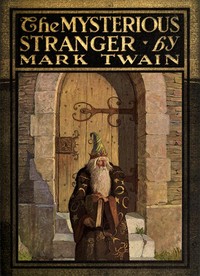
Reading The Plattner Story reminded me of the air after a storm in my childhood home, that strange, charged stillness. It’s the same feeling I get re-remembering The Mysterious Stranger: A Romance — Edition Insights, where the ordinary suddenly holds a curious, quiet menace. Both linger less as plots and more as vivid, unsettling moods I keep returning to.
Use these questions to collect your thoughts before moving on.