About 33 minutes
The Great Nebraska Sea — Themes and Context
Technology Airships Imagined Futures
7,382 recorded words. 1 minutes difference from this book's estimate.
View Gutenberg source #50893
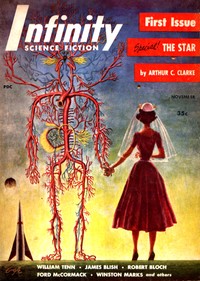
Before opening The First — Text and Context, the edition data offers a quick orientation: 7,645 words, 34 min estimated reading time, and 1 detected text section.
The text analysis averages about 13.8 words per sentence, while the detected sections provide another way to judge how the source is divided.
Project Gutenberg metadata also associates the work with “Science fiction,” connecting these edition facts with the source record’s subject description.
Explore this collection
These alternatives are selected using recorded categories and estimated reading time.
About 33 minutes
Technology Airships Imagined Futures
7,382 recorded words. 1 minutes difference from this book's estimate.
View Gutenberg source #50893About 35 minutes
Technology Airships Imagined Futures
7,978 recorded words. 1 minutes difference from this book's estimate.
View Gutenberg source #76114About 37 minutes
Technology Airships Imagined Futures
8,320 recorded words. 3 minutes difference from this book's estimate.
View Gutenberg source #64172Search stored excerpts and compare books → Choose by your preferences →
Choices use stored catalog measurements. Estimates vary with reading speed. A shared category is a catalog label, not a claim that two books have the same argument or literary quality.
Search reads excerpt text stored with this catalog and links to its associated Gutenberg record. The connection is stored in the site database; this tool does not recheck that every excerpt is word-for-word identical to that external record. Excerpt search does not cover every chapter and does not verify historical publication dates.
Catalog snapshot checked: 2026-09-25. Coverage: 98 public books, 98 available source excerpts.
Read the complete public-domain text at its original source.
Read on Project GutenbergThe story opens with a city transformed into a "colossal music box" and a "rainbow torn down from the sky," a dense sensory barrage of confetti, flags, and band music that establishes the public mood as euphoric. This lavish description of the celebration for Captain George Everson's moon flight is immediately undercut by the introduction of Jeffrey Simon, who watches from his apartment with a "grim half-smile." The contrast between the collective joy and one man's isolation sets up a tension that drives the narrative.
The narrative voice splits between the exuberant, almost breathless tone of the parade scenes and the weary, introspective voice of Jeffrey Simon. The opening paragraphs pile up similes and sensory details—"a thousand chants of victory," "breeze-filled flags dazzled them"—to create a feeling of overwhelming spectacle. In contrast, Jeffrey's sections use shorter, fragmented sentences: "He shuffled sleepily to a window. He blinked." His speech is marked by self-correction and murmuring, as when he says, "It's starting... the day that should have been yours." This vocal shift from public fanfare to private regret establishes the story's central conflict between outward heroism and hidden truth.
The story's pace accelerates during the newspaper office scene, where the small-eyed editor's rapid-fire questions and commands—"Come on, let's have that story again!"—create a staccato rhythm. Jeffrey's responses are slow, hesitant, punctuated by pauses and internal reflection. The editor's enthusiasm builds through exclamations and physical actions ("He laughed. 'What a damper we'll put on this celebration!'"), while Jeffrey's thoughts drift to "deep recesses of his mind." This alternation between hurried dialogue and lingering introspection controls the reader's sense of time, making the revelation feel both urgent and weighed down by memory.
Two objects recur with symbolic force: a stone and a photograph. The editor "toyed with the stone and the photograph" as he considers Jeffrey's story, treating them as commodities for a headline. Jeffrey, however, sees them as evidence of a forgotten past. The stone is described as "your stone" by the editor, reducing it to a prop, while for Jeffrey it represents a claim to truth. The photograph, a picture of the moon, becomes a point of contention—the editor imagines using it to capture "Everson's expression." These details anchor the abstract debate about heroism in tangible items, and their handling by each character reveals their differing stakes in the story.
Readers should attend to how Ludwig uses the contrast between public spectacle and private reflection to question the nature of heroism. The story's effectiveness lies not in its plot twist but in the way it makes the reader feel the weight of a single dissenting voice against a chorus of celebration. The pacing—alternating between frantic dialogue and slow, contemplative passages—mirrors Jeffrey's own struggle between speaking out and staying silent.
That rainy afternoon, pacing through Ludwig’s moon launch versus the survivor’s bitter whisper, I kept thinking how easily we trade one story for another. Later, drying off, I found Be young again! — Edition Insights on the shelf, and it felt like the same quiet trick—remembering what the headlines forgot. No fireworks, just a softer version of that ache.
Answer a few questions and save a private reflection on this device.