About 229 minutes
Philosopher Jack — Edition Insights
Technology Airships Imagined Futures
52,604 recorded words. 3 minutes difference from this book's estimate.
View Gutenberg source #21756
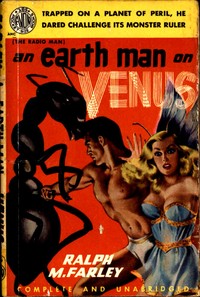
Before opening An Earthman on Venus (Originally titled "The Radio Man") — Inside the Classic, the edition data offers a quick orientation: 53,348 words, 3 hr 52 min estimated reading time, and 7 detected text sections.
The text analysis averages about 19.4 words per sentence, while the detected sections provide another way to judge how the source is divided.
Project Gutenberg metadata also associates the work with “Science fiction,” connecting these edition facts with the source record’s subject description.
Explore this collection
These alternatives are selected using recorded categories and estimated reading time.
About 229 minutes
Technology Airships Imagined Futures
52,604 recorded words. 3 minutes difference from this book's estimate.
View Gutenberg source #21756About 217 minutes
Technology Airships Imagined Futures
49,683 recorded words. 15 minutes difference from this book's estimate.
View Gutenberg source #1284About 207 minutes
Technology Airships Imagined Futures
47,601 recorded words. 25 minutes difference from this book's estimate.
View Gutenberg source #60374Search stored excerpts and compare books → Choose by your preferences →
Choices use stored catalog measurements. Estimates vary with reading speed. A shared category is a catalog label, not a claim that two books have the same argument or literary quality.
Search reads excerpt text stored with this catalog and links to its associated Gutenberg record. The connection is stored in the site database; this tool does not recheck that every excerpt is word-for-word identical to that external record. Excerpt search does not cover every chapter and does not verify historical publication dates.
Catalog snapshot checked: 2026-09-25. Coverage: 98 public books, 98 available source excerpts.
Read the complete public-domain text at its original source.
Read on Project GutenbergThe novel opens with a startling confession: "Never had I been so frightened in all my life!" This first-person exclamation immediately establishes Myles Cabot's voice—colloquial, urgent, and prone to dramatic understatement. The narrative voice throughout the excerpts is that of a resourceful but self-deprecating protagonist who narrates his own exploits with a blend of technical precision and emotional candor. Farley alternates between rapid-fire action sequences and slower passages of exposition, particularly when Cabot explains the radio principles that govern his interplanetary travel. This oscillation creates a distinctive rhythm that mirrors the protagonist's own struggle to adapt to Venus's dangers.
Cabot's narration is marked by a constant awareness of his audience. He frequently interjects phrases like "as I well knew" and "as it takes to set them down," creating an intimate, almost conversational tone. This self-awareness extends to his own limitations: he admits fear, acknowledges his lack of weapons, and even reflects on the absurdity of his situation. The voice is distinctly American and early 20th-century, with a breezy confidence that occasionally veers into melodrama. Farley uses this voice to maintain reader engagement during technical explanations, as when Cabot describes the umbrella's construction in precise detail before deploying it as a shield. The narrator's personality—curious, brave, but never infallible—becomes a lens through which the alien world is filtered.
The spider-cave episode exemplifies Farley's control of pacing. The scene begins with a rapid crawl, interrupted by Lilla's warning, then slows for a detailed inventory of the umbrella's properties. Farley devotes multiple paragraphs to the umbrella's material and mechanics, pausing the action to build tension. When the spider attacks, the prose accelerates again, with short sentences and immediate reactions. This pattern—action, pause for explanation, renewed action—recurs throughout the excerpts. The umbrella itself becomes a focal point: a mundane object repurposed as a survival tool, its description grounded in physical specifics ("alloy steel of a great springiness") that lend credibility to the fantastical setting. The pacing shift mirrors Cabot's own thought process, as he calculates risks mid-crisis.
The original title, The Radio Man, signals the centrality of radio technology to the narrative. Cabot's ability to "broadcast" himself to Venus is not merely a plot device but a recurring structural element. The excerpts show radio waves as both a means of transport and a source of knowledge: Cabot uses his flash-light (a radio-derived tool) and later communicates with ant-men through radiations. Farley integrates technical jargon—"radiations," "broadcast," "flash-light"—into the adventure vocabulary, creating a hybrid of pulp action and scientific speculation. The radio motif also influences the narrative's pacing: moments of technical explanation act as interludes between physical confrontations, mirroring the way radio signals cut through static. This interplay between science and survival defines the novel's unique texture.
Readers approaching An Earthman on Venus should attend to how Farley uses Cabot's voice to mediate between the familiar and the alien. The narrator's constant self-commentary—his fears, his calculations, his dry humor—transforms what could be a simple adventure into a study of human adaptability. Pay particular attention to the way objects (umbrellas, flash-lights, radio equipment) are described with technical specificity before being weaponized; this pattern reveals Farley's method of grounding fantasy in material reality.
There’s something about that old radio hum in Farley’s story—that sense of being alone with a voice, piecing together a world you can’t quite see. It reminded me of the quiet hours spent with the steam man’s clanking progress through Central America, where wonder moves slowly, almost reluctantly. Frank Reade, Jr., With His New Steam Man in Central America — Reading Companion lingers the same way, softly. I keep thinking about it at odd moments, like an old friend’s sidetracked tale.
Save your reaction, strongest insight, and memorable passage.