About 203 minutes
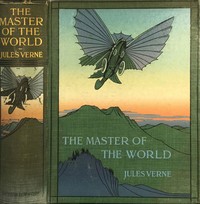
The Master of the World — Edition Insights
Technology Airships Imagined Futures
46,486 recorded words. 11 minutes difference from this book's estimate.
View Gutenberg source #3809
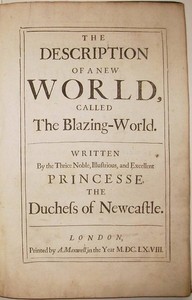
The source record for The Description of a New World, Called the Blazing-World — Text and Context measures this digital text at 44,109 words, 3 hr 12 min estimated reading time, and 4 detected text sections.
The text analysis averages about 47.8 words per sentence, while the detected sections provide another way to judge how the source is divided.
Project Gutenberg metadata also associates the work with “Science fiction,” connecting these edition facts with the source record’s subject description.
Explore this collection
These alternatives are selected using recorded categories and estimated reading time.
About 203 minutes
Technology Airships Imagined Futures
46,486 recorded words. 11 minutes difference from this book's estimate.
View Gutenberg source #3809About 179 minutes
Technology Airships Imagined Futures
41,063 recorded words. 13 minutes difference from this book's estimate.
View Gutenberg source #50109About 207 minutes
Technology Airships Imagined Futures
47,601 recorded words. 15 minutes difference from this book's estimate.
View Gutenberg source #60374Search stored excerpts and compare books → Choose by your preferences →
Choices use stored catalog measurements. Estimates vary with reading speed. A shared category is a catalog label, not a claim that two books have the same argument or literary quality.
Search reads excerpt text stored with this catalog and links to its associated Gutenberg record. The connection is stored in the site database; this tool does not recheck that every excerpt is word-for-word identical to that external record. Excerpt search does not cover every chapter and does not verify historical publication dates.
Catalog snapshot checked: 2026-09-25. Coverage: 98 public books, 98 available source excerpts.
Read the complete public-domain text at its original source.
Read on Project GutenbergMargaret Cavendish's The Description of a New World, Called the Blazing-World (1668) opens with a striking prefatory poem that claims the author has made a world 'of Nothing, but pure Wit.' This boast sets the tone for a work that is at once a utopian fantasy, a philosophical dialogue, and a playful assertion of female intellectual authority. Cavendish herself describes the book as having three parts: 'Romancical,' 'Philosophical,' and 'meerly Fancy.' The excerpts reveal a narrative that moves between a fantastical voyage and a series of debates between an empress and spirits on topics ranging from the nature of matter to the diet of beasts.
The prefatory materials frame the Blazing-World as a deliberate act of creation. The Duchess of Newcastle addresses 'Noble and Worthy Ladies,' explaining that she separated this work from her Observations upon Experimental Philosophy to offer 'Fancies' more palatable to female readers. She declares herself 'as Ambitious as ever any of my Sex was' and imagines a world rich in gold and diamonds—though she would share them with friends. This self-conscious positioning of the author as a 'Creatoress' rather than a discoverer (like Columbus, mentioned in the opening poem) establishes the book as a work of imaginative sovereignty, not mere travel narrative.
In the excerpted dialogue, the Empress questions spirits about the first man, the naming of animals, and the fall from grace. Her queries are precise: she asks whether the first man named fishes (the spirits say no, as he was 'an Earthly, not a Watery Creature'), and whether beasts eat the best fruits (yes, squirrels and monkeys are 'the best Chusers'). The spirits gently rebuke her when she asks about the origin of sin, saying it 'went beyond their knowledg.' The Empress then confesses a desire to 'make a Cabbala'—at which the spirits immediately vanish. This moment encapsulates the tension between boundless curiosity and the limits of revealed knowledge.
The spirits argue that 'Spirits being immaterial, cannot properly make a World; for a World belongs to material, not to immaterial Creatures.' They insist that natural lives, forms, and matter are inseparable. This philosophical position contrasts with the Empress's earlier ambition to create a Cabbala—a spiritual or interpretive system. The dialogue thus stages a conflict between materialist cosmology and the desire for transcendent knowledge. Cavendish, a noted materialist philosopher in her own right, uses the spirits to voice a view that matter and life are coextensive, even as her narrative constructs a world from 'pure Wit.'
Readers approaching the Blazing-World should attend to its hybrid form: part romance, part philosophical treatise, part satirical fantasy. The excerpts suggest that Cavendish uses the Empress's questions to probe the boundaries of human and spiritual knowledge, while the spirits' answers often reinforce a materialist worldview. The abrupt disappearance of the spirits when the Empress proposes a Cabbala hints at the limits of inquiry—and perhaps at the author's own ambivalence about systems of esoteric knowledge. This is a work that rewards attention to its framing devices and its playful, argumentative dialogues.
I keep thinking about how Cavendish built a whole universe from sheer imagination, asking spirits about what words can truly name. It felt like a quiet conversation about limits we all brush against. That same tender questioning of unseen margins lingered in The Margenes — Background and Themes, and I found myself sitting with it a little longer than expected.
Answer a few questions and save a private reflection on this device.