About 218 minutes
The Cowardly Lion of Oz — Background and Themes
Fantasy Juvenile Worlds
50,116 recorded words. 18 minutes difference from this book's estimate.
View Gutenberg source #58765
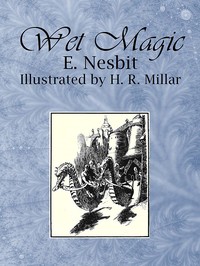
Wet Magic — Themes and Context can be approached with a clearer sense of reading commitment from its source measurements: 54,138 words, 3 hr 56 min estimated reading time, and 15 detected text sections.
The text analysis averages about 16.0 words per sentence, while the detected sections provide another way to judge how the source is divided.
Project Gutenberg metadata also associates the work with “Fantasy fiction,” connecting these edition facts with the source record’s subject description.
Explore this collection
These alternatives are selected using recorded categories and estimated reading time.
About 218 minutes
Fantasy Juvenile Worlds
50,116 recorded words. 18 minutes difference from this book's estimate.
View Gutenberg source #58765About 214 minutes
Fantasy Juvenile Worlds
49,164 recorded words. 22 minutes difference from this book's estimate.
View Gutenberg source #49913About 211 minutes
Fantasy Juvenile Worlds
48,451 recorded words. 25 minutes difference from this book's estimate.
View Gutenberg source #953Search stored excerpts and compare books → Choose by your preferences →
Choices use stored catalog measurements. Estimates vary with reading speed. A shared category is a catalog label, not a claim that two books have the same argument or literary quality.
Search reads excerpt text stored with this catalog and links to its associated Gutenberg record. The connection is stored in the site database; this tool does not recheck that every excerpt is word-for-word identical to that external record. Excerpt search does not cover every chapter and does not verify historical publication dates.
Catalog snapshot checked: 2026-09-25. Coverage: 98 public books, 98 available source excerpts.
Read the complete public-domain text at its original source.
Read on Project GutenbergE. Nesbit opens Wet Magic with a sentence that sprawls across the page, mimicking the Sussex downs where roads become sheep tracks and then grass. The children’s seaside preparations—Bernard’s homemade calendar, Mavis washing dolls’ clothes—are rendered in exact, homely detail. Yet the prose already hints at a world where time and scale are unreliable: the beginning that seems endless, the aquarium bought for eight-and-ninepence that will later hold a mermaid. Nesbit’s narrator moves between the children’s limited perspectives and a knowing adult voice, especially in asides like “Things which you feel in your bones are most convincing.” This double register—childlike earnestness undercut by wry observation—shapes the entire opening.
The first chapter dwells on the children’s ordinary routines: Mavis ironing doll clothes, Bernard crossing off days with green chalk, secret consultations that turn out to be about an aquarium. These details are not mere scene-setting; they establish a baseline of realistic behavior against which the fantastic events will be measured. Nesbit’s diction is precise: the calendar is made from “the bottom of the box in which his new white sandshoes came home,” and the aquarium costs “eight-and-ninepence in the Old Kent Road.” Such specificity roots the story in a recognizable Edwardian childhood. Even the dolls have names—Lord Edward, with his half-gone head—and their treatment reveals sibling dynamics. Mavis’s threat “I’ll never wash anything for you again, not even your face” is both funny and credible. These mundane moments make the later dive into a well-cave feel earned, not arbitrary.
When the children reach the underwater kingdom, Nesbit shifts to a tone of mock-heroic pageantry. The review of troops includes the 23rd Lobsters (“as big as a Guardsman, and rather stouter”), the 16th Swordfish in “uniform of delicate silver,” and the Queen’s Own Gurnards “in pink and silver, with real helmets and spiked collars.” The catalog of regiments—Lobster Battalion, Crustacean Brigade, Cetacean Regiments riding whales—mixes biological accuracy with absurd grandeur. The narrator’s aside that lobsters in nature are not red but “steel-blue armor” shows a care for factual detail even within fantasy. This military spectacle is not merely decorative; it establishes a structured society with its own rules and hierarchies, preparing for the later water-war. The children’s reaction—“Rather,” says Bernard—keeps the tone light, but the precision of the descriptions suggests a world that operates on consistent, if whimsical, logic.
Nesbit repeatedly emphasizes that the underwater realm operates on different rules. The Princess Maia explains: “time spent in other worlds doesn’t count in your own home. … your time is not like our time at all.” She compares the difference to “a starlight and a starfish”—a simile that is both poetic and deliberately inexact. The children struggle to grasp this, as when Bernard protests “that’s hours ago.” The narrator also plays with scale: the jar that is “the source of all the rivers in all the world” is held by a princess, and the pool shows visions of the Red Indians, the Nile, the Ganges, the Thames. These global images collapse distance and size, yet the prose remains concrete—“brown men setting their fish traps,” “girls in pink and blue punting.” The effect is to make the magical seem matter-of-fact, while the human characters’ confusion underscores the limits of their perspective.
H. R. Millar’s illustrations, listed in the contents, are not mere decorations but integral to the story’s structure. The frontispiece “The sea came pouring in” suggests a moment of inundation that the text may describe. Other captions—“‘Translucent wave,’ indeed!” and “The police”—hint at comic or dramatic scenes. The illustration “She caught Kathleen in her arms” and “The golden door” point to key emotional and fantastical beats. Nesbit’s prose often describes scenes that cry out for visual rendering, such as the dissolving views in the pool or the parade of lobster-soldiers. The collaboration between author and illustrator is tight: Millar’s images likely clarify the absurd scale of the Cetacean Regiments or the precise appearance of the Book People mentioned in later chapters. Readers should attend to these illustrations as they would to stage directions in a play.
Nesbit’s narrative voice is the real magic in Wet Magic: it shifts from colloquial to lyrical, from ironic to earnest, without losing coherence. Pay attention to the asides—the narrator’s comments on what children used to love, or the way time works—because they reveal the author’s craft. The book rewards readers who enjoy noticing how a sentence can hold both a child’s wonder and an adult’s wry smile.
I’ve always treasured how Wet Magic treats a child’s solemn promise as something that shifts the very tides. There’s a particular tenderness in that—the way small, kept words ripple outward. It reminds me of another quiet volume, The vengeance of Toffee — A Reader’s Guide, where a similar gravity hides beneath a playful name. Both books whisper that loyalty needs no trumpets, only a steady heart.
Use these questions to collect your thoughts before moving on.