About 211 minutes
Tom Swift and His Big Tunnel; Or, The Hidden City of the Andes — Inside the Classic
Fantasy Juvenile Worlds
48,451 recorded words. 3 minutes difference from this book's estimate.
View Gutenberg source #953
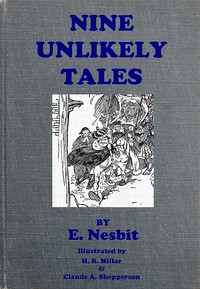
The catalog record for Nine Unlikely Tales — Key Ideas to Explore provides practical reading context through 49,164 words, 3 hr 34 min estimated reading time, and 14 detected text sections.
The text analysis averages about 18.7 words per sentence, while the detected sections provide another way to judge how the source is divided.
Project Gutenberg metadata also associates the work with “Fairy tales,” connecting these edition facts with the source record’s subject description.
Explore this collection
These alternatives are selected using recorded categories and estimated reading time.
About 211 minutes
Fantasy Juvenile Worlds
48,451 recorded words. 3 minutes difference from this book's estimate.
View Gutenberg source #953About 218 minutes
Fantasy Juvenile Worlds
50,116 recorded words. 4 minutes difference from this book's estimate.
View Gutenberg source #58765About 209 minutes
Fantasy Juvenile Worlds
47,982 recorded words. 5 minutes difference from this book's estimate.
View Gutenberg source #23869Search stored excerpts and compare books → Choose by your preferences →
Choices use stored catalog measurements. Estimates vary with reading speed. A shared category is a catalog label, not a claim that two books have the same argument or literary quality.
Search reads excerpt text stored with this catalog and links to its associated Gutenberg record. The connection is stored in the site database; this tool does not recheck that every excerpt is word-for-word identical to that external record. Excerpt search does not cover every chapter and does not verify historical publication dates.
Catalog snapshot checked: 2026-09-25. Coverage: 98 public books, 98 available source excerpts.
Read the complete public-domain text at its original source.
Read on Project GutenbergThe nine stories in this collection share a playful irreverence toward fairy-tale conventions, as seen in the opening tale where Matilda, scrubbed raw by her nurse Pridmore, wishes she had been born a savage rather than at Brixton. The catalog subjects list "Fairy tales" and "Wit and humor, Juvenile," and the excerpts bear out that blend: the humor arises not from slapstick but from the collision of magical premises with mundane details. In "Melisande: Or Long and Short Division," a princess's hair grows so fast that it becomes the kingdom's chief export, stuffed into pillows and ropes, while the hermits who try haircloth shirts find them too comfortable. The stories consistently treat magic as a practical problem to be solved, often through bureaucratic or economic means, rather than as a source of wonder.
The excerpts show that Nesbit’s magic rarely arrives with grandeur. In "The Cockatoucan," the titular creature appears without fanfare, and the story’s conflict revolves around a child’s resentment of a thorough washing. The humor comes from the gap between the fantastic premise and the ordinary setting: Brixton, a London suburb, is named explicitly. The catalog subject "Children's stories" is accurate, but the tone is not sentimental. When the Princess Melisande’s hair becomes a national resource, the king writes to the fairy godmother by skylark and receives a reply suggesting he advertise for a prince—a bureaucratic solution that undercuts the romance of the quest. The stories treat magic as something that intrudes on daily life, often causing inconvenience before any resolution.
The list of illustrations hints at the visual humor that complements the text. Images such as "The top part of Pridmore turned into painted iron and glass" and "The Princess was like a yard and a half of white tape" suggest a style that exaggerates physical transformations for comic effect. The two illustrators, H. R. Millar and Claude A. Shepperson, contribute to the book’s tone, though the excerpts do not reveal which artist drew which plate. The illustrations appear to depict key moments of absurdity—a king turned into a villa residence, a giant little girl—reinforcing the stories’ tendency to literalize metaphors. Readers may find that the pictures amplify the text’s deadpan delivery of impossible events.
The title Nine Unlikely Tales signals that each story will test the boundaries of plausibility within a fantasy framework. The excerpts show a consistent pattern: a single fantastical element is introduced into an otherwise realistic setting, and the narrative follows its logical (or illogical) consequences. In "Melisande," the hair-growth curse is treated as an economic problem, with the king consulting merchants and exporting hair products. The story includes a love plot, but it is secondary to the absurd logistics of managing the hair. The catalog subject "Fantasy fiction" fits, but the stories are closer to satirical fables than to epic fantasy. The word count (49,164 words) suggests each tale is compact, allowing Nesbit to develop a premise quickly and then subvert it.
Readers approaching Nine Unlikely Tales should expect wit rather than sentiment. The stories reward attention to how Nesbit uses precise, concrete details—like the prickly inside of a new dress or the weight of a princess’s hair—to ground her fantasies. The humor is dry, the magic is messy, and the endings often hinge on cleverness rather than heroism. These tales are best read one at a time, allowing each unlikely premise to land on its own terms.
I kept thinking about Nesbit’s odd magic — how a wish lands sideways, like a hair-export that ruins a kingdom. It reminded me of that quieter book where cowardice itself feels like a burden nobody asked for. The Cowardly Lion of Oz — Background and Themes touches the same tender ache, the comedy of wanting courage but not knowing what to do with it. Those stories stay, almost embarrassingly close.
A brief reflection can help important ideas stay with you longer.