About 290 minutes
Landscape with figures — Reading Notes
Fantasy Juvenile Worlds
66,699 recorded words. 22 minutes difference from this book's estimate.
View Gutenberg source #76764
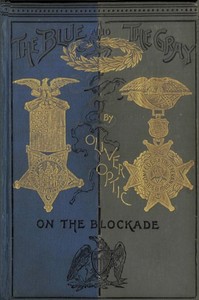
Before opening On The Blockade — Context and Discussion, the edition data offers a quick orientation: 71,748 words, 5 hr 12 min estimated reading time, and 10 detected text sections.
The text analysis averages about 19.8 words per sentence, while the detected sections provide another way to judge how the source is divided.
Project Gutenberg metadata also associates the work with “War stories,” connecting these edition facts with the source record’s subject description.
Explore this collection
These alternatives are selected using recorded categories and estimated reading time.
About 290 minutes
Fantasy Juvenile Worlds
66,699 recorded words. 22 minutes difference from this book's estimate.
View Gutenberg source #76764About 236 minutes
Fantasy Juvenile Worlds
54,138 recorded words. 76 minutes difference from this book's estimate.
View Gutenberg source #50361About 218 minutes
Fantasy Juvenile Worlds
50,116 recorded words. 94 minutes difference from this book's estimate.
View Gutenberg source #58765Search stored excerpts and compare books → Choose by your preferences →
Choices use stored catalog measurements. Estimates vary with reading speed. A shared category is a catalog label, not a claim that two books have the same argument or literary quality.
Search reads excerpt text stored with this catalog and links to its associated Gutenberg record. The connection is stored in the site database; this tool does not recheck that every excerpt is word-for-word identical to that external record. Excerpt search does not cover every chapter and does not verify historical publication dates.
Catalog snapshot checked: 2026-09-25. Coverage: 98 public books, 98 available source excerpts.
Read the complete public-domain text at its original source.
Read on Project GutenbergThe excerpt from On the Blockade opens with a supper scene that is anything but ordinary: the Union commander Christy Passford dines with his prisoner, Captain Dinsmore of the Confederate steamer Ocklockonee. The meal is described with specific dishes—broiled chickens, tempting dishes—but the conversation is laced with wariness and veiled accusations. Dinsmore, having lost his vessel through what Christy considers carelessness, is both guest and captive, and the dialogue reveals a careful dance of courtesy and suspicion.
This scene exemplifies the novel's focus on naval deception and the personal tensions of the Civil War. Christy, at eighteen, commands a ship and must navigate not only enemy threats but also the social protocols of war. The excerpt hints at a broader pattern of mistaken identity and broken machinery—a bolt in the engine—that drives the plot, grounding the adventure in practical naval details.
The supper scene in the excerpt is a microcosm of the novel's central tensions. Christy Passford, the young Union commander, hosts Captain Dinsmore, the Confederate prisoner, with formal politeness. The food is described as “especially inviting,” but the conversation is strained. Dinsmore questions Christy's age and experience, implying that his youth makes his success a matter of luck rather than skill. Christy deflects with good humor, noting that he tries to “make myself as old as I can.” The exchange is a subtle power struggle: Dinsmore attempts to assert moral or social superiority even in defeat, while Christy maintains control without overt hostility.
The broken engine bolt that led to Dinsmore's capture is a recurring motif—a mechanical failure that becomes a plot hinge. Dinsmore's explanation that he mistook the Bronx for another vessel underscores the theme of misidentification that runs through the series. The supper ends with Christy imposing restrictions, asking Dinsmore to remain in the cabin, a polite but firm assertion of authority.
Christy Passford's age is a point of tension throughout the excerpt. At eighteen, he commands a steamer and has already been a prisoner of war. Dinsmore's incredulity—“Eighteen!”—highlights the extraordinary circumstances of the Civil War, which pushed young officers into positions of responsibility. Christy's response, referencing his experience on the Bellevite, suggests a backstory of preparation, but the novel does not dwell on it. Instead, the dialogue emphasizes the gap between appearance and capability: Christy has “physique enough for a man of twenty-five,” but his youth is a vulnerability that Dinsmore tries to exploit.
The preface to the book, written by Optic, frames the story as fiction that is “reasonably consistent with the spirit and the truth of history.” This allows for improbable events—like a teenage commander—while grounding them in the plausible chaos of war. The excerpt does not resolve whether Christy's youth is an asset or a liability, leaving that tension for the reader to follow.
The excerpt is rich with the vocabulary of disguise and misdirection. Dinsmore says he was “deceived” by the Bronx's appearance, and Christy notes that he had “profited by the other's carelessness.” The word “deceived” recurs, and the conversation circles around what was seen and what was believed. The broken engine bolt is a concrete detail that stands for larger failures of perception: Dinsmore trusted a faulty machine and a false assumption.
Optic's prose is direct, with little ornamentation, but it carries a subtext of constant vigilance. Christy is “light-hearted” only after the supper, when he feels he no longer needs to “watch the conspirators.” This suggests a narrative pattern of surveillance and counter-surveillance, where every meal and every courtesy might be a tactic. The novel's title, On the Blockade, points to this static yet tense condition: waiting, watching, and the sudden violence of capture.
Readers approaching On the Blockade should attend to the small details of shipboard life—the meals, the machinery, the formalities—as they carry the weight of the plot. Optic uses these concrete elements to build a world where trust is provisional and every encounter is a potential trap. The excerpt offers a concentrated sample of the novel's method: a scene of apparent civility that is actually a field of conflict.
That supper scene reminded me of my grandfather’s stories about wartime politeness—how strangers could share salt while plotting outcomes. Reading it, I recalled a long winter evening with The vengeance of Toffee — A Reader’s Guide, where mercy and suspicion also shared a table. Both books let me sit with that uneasy quiet, the way old kitchens hold unspoken truces.
Save your reaction, strongest insight, and memorable passage.