About 312 minutes
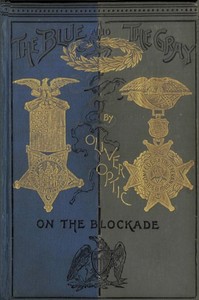
On The Blockade — Context and Discussion
Fantasy Juvenile Worlds
71,748 recorded words. 22 minutes difference from this book's estimate.
View Gutenberg source #18617
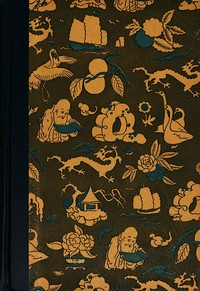
This digital edition of Landscape with figures — Reading Notes is described by source-level measurements including 66,699 words, 4 hr 50 min estimated reading time, and 52 detected text sections.
The text analysis averages about 15.0 words per sentence, while the detected sections provide another way to judge how the source is divided.
Project Gutenberg metadata also associates the work with “Fantasy fiction,” connecting these edition facts with the source record’s subject description.
Explore this collection
These alternatives are selected using recorded categories and estimated reading time.
About 312 minutes
Fantasy Juvenile Worlds
71,748 recorded words. 22 minutes difference from this book's estimate.
View Gutenberg source #18617About 236 minutes
Fantasy Juvenile Worlds
54,138 recorded words. 54 minutes difference from this book's estimate.
View Gutenberg source #50361About 218 minutes
Fantasy Juvenile Worlds
50,116 recorded words. 72 minutes difference from this book's estimate.
View Gutenberg source #58765Search stored excerpts and compare books → Choose by your preferences →
Choices use stored catalog measurements. Estimates vary with reading speed. A shared category is a catalog label, not a claim that two books have the same argument or literary quality.
Search reads excerpt text stored with this catalog and links to its associated Gutenberg record. The connection is stored in the site database; this tool does not recheck that every excerpt is word-for-word identical to that external record. Excerpt search does not cover every chapter and does not verify historical publication dates.
Catalog snapshot checked: 2026-09-25. Coverage: 98 public books, 98 available source excerpts.
Read the complete public-domain text at its original source.
Read on Project GutenbergThe narrative of Landscape with Figures unfolds through the diaries of Ambrose Herbert, a European businessman traveling with six associates on Lord Sombrewater's steam-yacht. The preface frames the book as an attempt to reproduce experiences from contemplating Chinese pictures and porcelain, and the story itself grows from Herbert's leaves "like an image of some choice, cultivated flower." The seven men, calling themselves the Seven Sages, visit a valley of the Far East where they encounter Chinese practitioners of wisdom. The structure alternates between dialogue-heavy scenes—often on verandahs or in bamboo groves—and passages of reflection, creating a rhythm of social exchange and solitary observation.
The book opens with a preface that explicitly states its origin: it is "only an attempt to reproduce, in words, experiences that have come in contemplating the landscapes, flowers and figures in Chinese pictures and on their porcelain." This frames the entire work as a meditation on visual art translated into prose. The first chapter then introduces Ambrose Herbert's diaries as the source, noting that the story "grows from his leaves like an image of some choice, cultivated flower." This layered framing—preface, diary, narrative—establishes a self-conscious distance between the reader and the events, as if viewing them through multiple lenses. The preface also mentions that the originals of the three Chinese friends are in the British Museum, grounding the fiction in real artifacts.
The group of seven men are introduced as businessmen associated with Lord Sombrewater, who travels with them on his steam-yacht. They dine weekly in England, discussing life and the world, but the narrator notes that "they scarcely held their own, when it came to philosophy, with the uncompromising practitioners of wisdom they found" in China. Five of them live by "common-sense adjustment to the more obvious in circumstances," while two "had gone wrong." This division hints at internal conflict. The Europeans are described as men of "considerable sensibility" who do not give "the things of the spirit undue attention." Their encounter with Chinese thought challenges their pragmatic worldview, as seen in dialogues where characters like Ambrose and a woman discuss passion, desire, and the nature of existence.
The text is saturated with sensory details drawn from Chinese art: a "delicate lily-smell, a faint water-smell" teases the senses, and characters are compared to flowers, fireflies, and bamboo-fairies. In one scene, a woman loosens her wrap and glimmers "like a firefly or some sort of bamboo-fairy." The moon appears repeatedly, hanging "in a deep sky behind a delicate pattern of leaves." These images create a dreamlike atmosphere, blurring the line between the real and the imagined. The preface's mention of "queer landscapes, alien, impenetrable faces, in an unreal world of paradoxical dreams" is borne out by such passages, where the setting feels both tangible and illusory.
The narrative moves fluidly between distinct spaces: the verandah, where philosophical conversations occur; the lawn, where characters step down into the night; and the bamboo grove, which offers concealment and intimacy. In one sequence, a woman rises from the verandah, steps onto the lawn, and leads the way up a path into the bamboo grove, where the moon is visible through leaves. This movement is not merely physical but symbolic, transitioning from structured social space to natural, hidden enclave. The grove becomes a setting for heightened awareness and potential transgression, as when the woman considers bathing in the night. The shifts in location mirror the characters' shifts in consciousness, from mundane observation to mystical possibility.
Readers attentive to the interplay between European and Chinese perspectives will find the book's structure rewards close attention to its framing devices and sensory imagery. The diary format invites speculation about reliability, while the recurring motifs of flowers, water, and moonlight anchor the abstract discussions in tangible details. The incomplete excerpts leave the resolution of the Seven Sages' journey unknown, but the work's value lies in its atmospheric evocation of a meeting between two worlds.
I finished that diary about the valley and kept thinking about how quietly its people listened, how they let old stories settle into them. Something in that stillness reminded me of another book, one that holds dragons the same way—not as beasts, but as patient presences. The Book of Dragons — A Reader’s Guide left me with that same hush, like a door left ajar on a warm afternoon.
Your answers remain private and are stored only in this browser.