About 160 minutes
Skull-face — Text and Context
Fantasy Juvenile Worlds
36,714 recorded words. 11 minutes difference from this book's estimate.
View Gutenberg source #71268
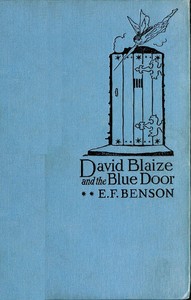
The catalog record for David Blaize and the Blue Door — Text and Context provides practical reading context through 39,165 words, 2 hr 51 min estimated reading time, and 5 detected text sections.
The text analysis averages about 17.0 words per sentence, while the detected sections provide another way to judge how the source is divided.
Project Gutenberg metadata also associates the work with “Fantasy fiction,” connecting these edition facts with the source record’s subject description.
Explore this collection
These alternatives are selected using recorded categories and estimated reading time.
About 160 minutes
Fantasy Juvenile Worlds
36,714 recorded words. 11 minutes difference from this book's estimate.
View Gutenberg source #71268About 187 minutes
Fantasy Juvenile Worlds
42,845 recorded words. 16 minutes difference from this book's estimate.
View Gutenberg source #42401About 200 minutes
Fantasy Juvenile Worlds
45,785 recorded words. 29 minutes difference from this book's estimate.
View Gutenberg source #23661Search stored excerpts and compare books → Choose by your preferences →
Choices use stored catalog measurements. Estimates vary with reading speed. A shared category is a catalog label, not a claim that two books have the same argument or literary quality.
Search reads excerpt text stored with this catalog and links to its associated Gutenberg record. The connection is stored in the site database; this tool does not recheck that every excerpt is word-for-word identical to that external record. Excerpt search does not cover every chapter and does not verify historical publication dates.
Catalog snapshot checked: 2026-09-25. Coverage: 98 public books, 98 available source excerpts.
Read the complete public-domain text at its original source.
Read on Project GutenbergFrom its first chapter, David Blaize and the Blue Door establishes a distinct cosmology: the ordinary world is a drowsy illusion, and children under ten can access a 'real world' beneath it. The narrator treats this premise with deadpan seriousness, noting that grown-ups 'talk in their sleep' when asked about natural phenomena. The excerpts show a world governed by literal-minded rules—a cow-porter explains that an 'empty-speed express' moves as slowly as possible, and a crow's decision to stop flying renders David invisible. These details suggest a logic system more akin to dream physics than standard fantasy.
The Project Gutenberg record lists 'Fantasy fiction,' 'Adventure stories,' 'Boys -- Juvenile fiction,' and 'Imaginary places -- Juvenile fiction' as subjects. The excerpts do contain a boy protagonist and an imaginary realm, but the tone is notably wry and matter-of-fact rather than epic. David's adventures involve bureaucratic absurdities—a cow-porter who tosses luggage onto hooks, a train ride that lasts 'five or six years'—rather than sword fights or quests. The 'adventure' label fits only loosely; the excerpts show more negotiation with surreal systems than physical danger. The catalog's 'imaginary places' is accurate, but the excerpts emphasize the place's mundane strangeness over its wonder.
The narrator maintains a cool, slightly amused distance from the events. When David becomes invisible, the text reports: 'He held up his hand in front of him, but he could see nothing at all of it. It must have been there, because when he touched the end of his nose with it, it felt quite solid.' The logical deduction mimics a child's reasoning, but the phrasing is precise and understated. The crow's dialogue—'You aren't so pretty as all that, my young fellah'—introduces a blunt, unmagical voice that deflates any sentimentality. This tonal control suggests Benson is writing as much for adults as for children, embedding a gentle satire of rule-bound systems.
Sleep is a central mechanism: grown-ups are 'fast asleep,' David's invisibility makes him sleepy, and the crow falls asleep mid-conversation. The excerpts repeatedly link consciousness with visibility and agency. When the crow sleeps, David 'vanished for the present,' and his attempts to wake the crow fail. The train's 'empty-speed' motion—so slow it barely moves—further blurs the line between activity and stasis. These motifs suggest that the 'real world' is not a stable place but one where presence depends on the attention of others. The illustrations listed—'David finds the Blue Door,' 'David shakes the bottle at the cats'—hint at visual set-pieces that likely reinforce this theme of negotiated reality.
Readers approaching David Blaize and the Blue Door should expect a narrative that rewards attention to its internal rules. The excerpts offer no clear plot arc—David's goal is simply to explore—so the pleasure lies in the inventive, often bureaucratic logic of each encounter. The illustrations by H. J. Ford, listed but not reproduced here, likely amplify the whimsical precision of the text. Treat the catalog subjects as starting points, not summaries.
There’s a particular ache in David Blaize and the Blue Door—that longing beneath the whimsy, the way a boy’s playground logic bends toward something heavier. I still think of those cows and the empty-speed trains, though more softly now. It made me curious how another tale might treat that same hollowness, differently. The grisly horror — Edition Insights feels like a companion to that shadow, if you’re ever inclined to linger there.
Create a short personal record of your experience with this book.