About 48 minutes
Mistake inside — Key Ideas to Explore
Fantasy Juvenile Worlds
10,882 recorded words. 16 minutes difference from this book's estimate.
View Gutenberg source #68829
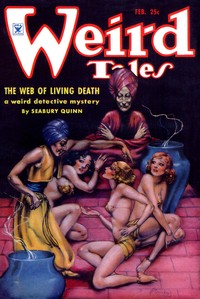
The catalog record for The grisly horror — Edition Insights provides practical reading context through 14,629 words, 1 hr 4 min estimated reading time, and 2 detected text sections.
The text analysis averages about 16.5 words per sentence, while the detected sections provide another way to judge how the source is divided.
Project Gutenberg metadata also associates the work with “Fantasy fiction,” connecting these edition facts with the source record’s subject description.
Explore this collection
These alternatives are selected using recorded categories and estimated reading time.
About 48 minutes
Fantasy Juvenile Worlds
10,882 recorded words. 16 minutes difference from this book's estimate.
View Gutenberg source #68829About 90 minutes
Fantasy Juvenile Worlds
20,665 recorded words. 26 minutes difference from this book's estimate.
View Gutenberg source #50133About 91 minutes
Fantasy Juvenile Worlds
20,903 recorded words. 27 minutes difference from this book's estimate.
View Gutenberg source #20307Search stored excerpts and compare books → Choose by your preferences →
Choices use stored catalog measurements. Estimates vary with reading speed. A shared category is a catalog label, not a claim that two books have the same argument or literary quality.
Search reads excerpt text stored with this catalog and links to its associated Gutenberg record. The connection is stored in the site database; this tool does not recheck that every excerpt is word-for-word identical to that external record. Excerpt search does not cover every chapter and does not verify historical publication dates.
Catalog snapshot checked: 2026-09-25. Coverage: 98 public books, 98 available source excerpts.
Read the complete public-domain text at its original source.
Read on Project GutenbergThe story opens with Bristol McGrath halted by a human groan in a Louisiana pine forest. He finds Ahmed, an Arab servant, bound and mutilated by an expert torturer. McGrath carries a frantic appeal signed by his worst enemy and naming a woman long dead. The narrative quickly establishes a landscape where ancestral dreads and childhood tales of black shapes feel immediate.
Howard's prose leans on sensory weight: the silence is a 'brooding cloak,' the shadows 'fixed, immovable.' McGrath moves with a 'noiseless slouch,' revolver appearing 'as if by magic.' The setting is not backdrop but active force, shaping both plot and psychology.
The catalog subjects list 'Louisiana -- Fiction' and 'Horror tales,' but the excerpts show Howard using place as a causal agent, not mere setting. McGrath reflects that 'certain natural conditions produce certain effects, breed certain pestilences of body or mind, regardless of their geographical situation.' The pinelands are 'as abysmal in their way as were the reeking African jungles.' This is not a generic swamp story; the text argues that the Mississippi swamps and the Congo swamps are functionally equivalent for breeding nightmare.
The trail is 'impassable for a vehicle, choked with rotting stumps.' Visibility vanishes 'a dozen feet back from the trail.' The land slopes upward away from the river, marsh vanishes, and the trail widens—but this only increases tension. McGrath takes to the thick woods, 'each movement sounding cannon-loud.' The geography dictates stealth and vulnerability.
Howard explicitly distinguishes voodoo from older African religion. Voodoo is 'comparatively a young religion, born in the hills of Haiti.' Behind it rise 'the grim religions of Africa, like granite cliffs glimpsed through a mask of green fronds.' The word 'Zambebwei' beats 'like the throb of a tom-tom' through McGrath's brain. It signifies 'something fearfully old and evil, something that had survived its natural epoch—a religion of the Night, and a deity whose name was Death and Horror.'
The text claims the black man's soul 'had not changed, through the slumberous centuries,' and that change possible in Harlem does not reach the Mississippi swamps. This is a racial essentialism typical of the period, but it drives the plot: the horror is not just supernatural but cultural, a survival of 'black, immemorial colossus.' The excerpts show no actual deity or ritual, only the idea of one.
McGrath's mission is personal: the appeal is signed by his 'worst enemy' and contains a dead woman's name. At the sight of John De Albor, 'a red mist turned the sunlight to blood.' Yet the excerpts do not reveal the nature of their enmity or the woman's identity. The narrative withholds backstory, focusing on immediate threat.
The torture of Ahmed is described with clinical precision: 'keen knives,' 'expert in the art of torture,' the victim's position noted. But the torturer is unseen. Later, McGrath spies a black man watching De Albor's cabin, lifting fingers to his mouth to whistle. The threat is diffuse—spies, drums heard earlier, a 'black god's hunger.' The excerpts build dread through what is not shown: the horror stalks, but its shape remains offstage.
The excerpts end before any confrontation with the grisly horror itself. Readers should note how Howard balances action—McGrath's stealth, the torture scene—with exposition on African religion and geography. The story's power lies in its atmosphere of ancient evil pressing against a modern man. Pay attention to the role of the Arab servant Ahmed: his mutilation is the first concrete horror, but his backstory and connection to Ballville are left unexplored in these pages.
Reading this, I remembered walking those same Louisiana pinelands once, feeling the weight of old roots beneath my feet—how a place can hold dread like heat in still air. It reminded me of another quiet afternoon, turning pages that traced how land shapes what we fear, in Landscape with figures — Reading Notes. Strange, how two books can echo the same hush.
Save your reaction, strongest insight, and memorable passage.