About 171 minutes
David Blaize and the Blue Door — Text and Context
Fantasy Juvenile Worlds
39,165 recorded words. 11 minutes difference from this book's estimate.
View Gutenberg source #48505
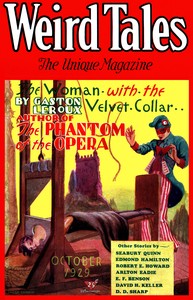
The source record for Skull-face — Text and Context measures this digital text at 36,714 words, 2 hr 40 min estimated reading time, and 5 detected text sections.
The text analysis averages about 17.9 words per sentence, while the detected sections provide another way to judge how the source is divided.
Project Gutenberg metadata also associates the work with “Fantasy fiction,” connecting these edition facts with the source record’s subject description.
Explore this collection
These alternatives are selected using recorded categories and estimated reading time.
About 171 minutes
Fantasy Juvenile Worlds
39,165 recorded words. 11 minutes difference from this book's estimate.
View Gutenberg source #48505About 141 minutes
Fantasy Juvenile Worlds
32,300 recorded words. 19 minutes difference from this book's estimate.
View Gutenberg source #6461About 135 minutes
Fantasy Juvenile Worlds
30,829 recorded words. 25 minutes difference from this book's estimate.
View Gutenberg source #6757Search stored excerpts and compare books → Choose by your preferences →
Choices use stored catalog measurements. Estimates vary with reading speed. A shared category is a catalog label, not a claim that two books have the same argument or literary quality.
Search reads excerpt text stored with this catalog and links to its associated Gutenberg record. The connection is stored in the site database; this tool does not recheck that every excerpt is word-for-word identical to that external record. Excerpt search does not cover every chapter and does not verify historical publication dates.
Catalog snapshot checked: 2026-09-25. Coverage: 98 public books, 98 available source excerpts.
Read the complete public-domain text at its original source.
Read on Project GutenbergThe story begins not with a character introduction but with a hashish dream. The narrator, a drug addict, experiences a vision of a skull-like face with yellow skin, glimmering eyes, and mummy-like hands. This apparition speaks in a voice like a long-dead man's, discussing the narrator as a potential tool. The dream intrudes on his ordinary reality, setting a pattern where visions and waking life blur throughout the narrative.
Howard structures the tale around these transitions between drug-induced states and concrete London settings. The opening chapter establishes a recurring motif: the skull-face appears in mist, then recedes, revealing a beautiful woman's face over its shoulder. This juxtaposition of horror and beauty recurs as the narrator moves between the Temple of Dreams and the streets of Limehouse.
The novel opens with the narrator lost in a hashish dream, described as a “timeless, spaceless journey.” The skull-face intrudes into this vision, speaking about the narrator as if he were an object. This dream sequence is not merely atmospheric; it drives the plot. The narrator later learns that the skull-face belongs to Kathulos, an ancient Egyptian sorcerer who has enslaved him through drug addiction.
Howard uses the drug state to blur the line between hallucination and reality. The narrator cannot trust his senses, and the reader shares his uncertainty. The dream also introduces key images—the skull, the mummy hands, the beautiful woman—that reappear in waking scenes. The hashish becomes a narrative device that justifies the story's supernatural elements while grounding them in a physical dependency.
The narrative shifts abruptly from the Temple of Dreams to the foggy streets of London's East End. The narrator, Stephen Costigan, moves between these two worlds: the drug-induced visions and the gritty reality of Limehouse and Chinatown. Howard emphasizes this movement through rapid scene changes. In one chapter, Costigan is in a trance; in the next, he is fleeing through alleys.
This structure creates a rhythm of disorientation. The reader is never allowed to settle into one mode. The city itself becomes a maze, mirroring the narrator's fractured consciousness. The recurring image of the skull-face appears in both realms, suggesting that the horror is not confined to dreams. The movement between settings also reflects the narrator's desperation as he searches for Zuleika, the woman glimpsed in the vision.
Howard repeats specific visual details to build a sense of dread. The skull-face is described with “hideous yellow” skin, “glimmering” eyes, and “long, lean and yellow” hands like a mummy's. These details recur whenever Kathulos appears, whether in dreams or in person. The mummy imagery extends to the sorcerer's voice, which sounds like a man “so long dead that his vocal organ had grown rusty.”
Other images repeat: the beautiful woman Zuleika is always seen over a shoulder or through a doorway, never fully present. The “Scorpion” is mentioned as a symbol of Kathulos's power. The violence in the Baron Rokoff scene—cleft skull, severed arm—echoes the skull-face's own mutilated appearance. These recurring images create a cohesive visual language that ties the disparate scenes together.
Costigan is dependent on an elixir that staves off the effects of drug withdrawal. He knows he has only four days' supply, creating a countdown that structures the latter part of the novel. This time pressure forces him to act recklessly, moving from one location to another in a frantic search for Kathulos's lair.
The elixir also serves as a plot device that limits the narrator's options. He cannot simply leave London or wait for help; his survival depends on finding the sorcerer. This urgency drives the narrative forward, preventing any pause for reflection. The countdown is mentioned explicitly: “Four days! Four days in which to comb the rat-holes of Limehouse.” The structure of the novel mirrors this desperation, with chapters becoming shorter and more action-packed as the deadline approaches.
Readers should pay attention to how Howard uses the hashish dream as both a framing device and a source of plot momentum. The novel's structure depends on the tension between the narrator's drug-induced visions and his physical actions in London. The recurring images—skull, mummy, beautiful woman—are not decorative but functional, linking the dream world to the waking one. The countdown of the elixir supply adds a ticking clock that propels the story toward its climax.
There’s something about how Skull-face sinks into you—that fog of hashish dreams mixing with gritty streets until you can’t tell which is more real. It reminded me of another quiet ache I found in Honey-Bee 1911 — Text and Context, where the ordinary and the strange breathe side by side. That lingering hum stays, soft and unhurried, long after the last page turns.
Answer a few questions and save a private reflection on this device.