About 255 minutes
The Raid of Dover: A Romance of the Reign of Woman, A.D. 1940 — A Reader’s Guide
Wandering Heroes Classic Adventures
58,641 recorded words. 32 minutes difference from this book's estimate.
View Gutenberg source #60222
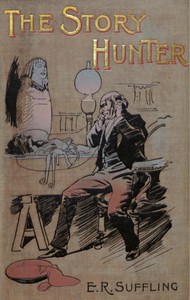
The source record for The story hunter — Background and Themes measures this digital text at 65,943 words, 4 hr 47 min estimated reading time, and 18 detected text sections.
The text analysis averages about 29.5 words per sentence, while the detected sections provide another way to judge how the source is divided.
Project Gutenberg metadata also associates the work with “Supernatural -- Fiction,” connecting these edition facts with the source record’s subject description.
Explore this collection
These alternatives are selected using recorded categories and estimated reading time.
About 255 minutes
Wandering Heroes Classic Adventures
58,641 recorded words. 32 minutes difference from this book's estimate.
View Gutenberg source #60222About 319 minutes
Wandering Heroes Classic Adventures
73,339 recorded words. 32 minutes difference from this book's estimate.
View Gutenberg source #62639About 242 minutes
Wandering Heroes Classic Adventures
55,539 recorded words. 45 minutes difference from this book's estimate.
View Gutenberg source #21725Search stored excerpts and compare books → Choose by your preferences →
Choices use stored catalog measurements. Estimates vary with reading speed. A shared category is a catalog label, not a claim that two books have the same argument or literary quality.
Search reads excerpt text stored with this catalog and links to its associated Gutenberg record. The connection is stored in the site database; this tool does not recheck that every excerpt is word-for-word identical to that external record. Excerpt search does not cover every chapter and does not verify historical publication dates.
Catalog snapshot checked: 2026-09-25. Coverage: 98 public books, 98 available source excerpts.
Read the complete public-domain text at its original source.
Read on Project GutenbergErnest R. Suffling opens The Story Hunter with a defensive preface: a critic had questioned his imaginative power, and this volume is offered as vindication. The framing device—a narrator who is a hypnotist on wheels—promises a collection of tales gathered through unusual means. The ten stories range from supernatural encounters to historical adventures, as indicated by titles like “A Visitor from Mars” and “Robin Hood in Winter.” The excerpt from “Barbe Rouge” reveals a grim scene on the island of Jethou, where a young Englishman named Trefry is killed by the pirate captain. The narrative is dense with sensory detail: a horn lantern, a stone floor, a white stocking cap, and a dagger stroke “swift as sight.”
The preface is unusually personal. Suffling recounts two negative reviews of his earlier book Jethou: one doubted its facts, the other found him lacking in “high invention.” He admits that “few persons see their own faults” and that he had never dreamed of any deficiency. The present volume is thus an explicit effort to prove his imaginative power. The introduction, titled “A Hypnotist on Wheels,” sets up a narrator whose hobby is collecting stories—perhaps through hypnotic means, though the excerpt does not show this in action. This framing suggests a self-conscious author responding to criticism, which colors the reader’s expectation of the tales that follow.
The excerpt from “Barbe Rouge” is a sustained scene of mounting tension and brutal violence. Trefry, searching for Mary and Retté, discovers Barbe Rouge digging a pit. He plans to kill the pirate with a stone, but is himself seized and stabbed. The prose is physical: Trefry “shook in every limb,” “staggered with his burden,” and the stone falls “with a thud into the hole.” The setting is precise—a house with five rooms, a mound, a horn lantern—and the action hinges on small details like a broomstick propped against the door. The narrative voice remains detached, even as it describes the dagger driving “deep into the young Englishman’s breast.”
Several recurring patterns emerge from the limited text. The preface establishes a tension between fact and fiction, as Suffling defends his work against a critic who “doubted the facts.” The excerpt, however, is clearly fictional, with a melodramatic revenge plot. The narrator’s hobby of story-hunting implies a collector’s attitude toward narrative, treating tales as objects to be gathered. The catalog subjects—supernatural, hypnotism, short stories—suggest that many tales will involve uncanny elements. The illustration by Paul Hardy, mentioned in the title page, adds a visual dimension. Readers should note how Suffling balances the framing device with the individual stories, and whether the hypnotist narrator reappears.
Readers approaching The Story Hunter will find a self-aware author responding to criticism, a framing narrator with a peculiar hobby, and a series of tales that mix the weird with the wild. The excerpt from “Barbe Rouge” demonstrates Suffling’s ability to build suspense and deliver violent payoff, but the full collection may reveal a wider range of tones and subjects. Pay attention to how the preface’s defensive stance echoes in the stories themselves, and whether the hypnotist frame truly unifies the volume.
There’s a persistent chill in that old Suffling collection, a hunger driving the hypnotist’s hunt. It stayed with me, that fierce, cold pursuit. Then I found The Fur Country: Or, Seventy Degrees North Latitude — A Closer Reading, and felt that same bleak longing, only whispered across the ice instead of screamed over the waves. Two books, one northern ache.
Your answers remain private and are stored only in this browser.