About 36 minutes
The silver key — A Reader’s Guide
Fantasy Juvenile Worlds
8,111 recorded words. 1 minutes difference from this book's estimate.
View Gutenberg source #70478
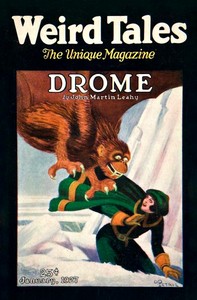
The source record for The lost race — Reading Companion measures this digital text at 8,374 words, 37 min estimated reading time, and 1 detected text section.
The text analysis averages about 17.6 words per sentence, while the detected sections provide another way to judge how the source is divided.
Project Gutenberg metadata also associates the work with “Short stories,” connecting these edition facts with the source record’s subject description.
Explore this collection
These alternatives are selected using recorded categories and estimated reading time.
About 36 minutes
Fantasy Juvenile Worlds
8,111 recorded words. 1 minutes difference from this book's estimate.
View Gutenberg source #70478About 31 minutes
Fantasy Juvenile Worlds
7,043 recorded words. 6 minutes difference from this book's estimate.
View Gutenberg source #23344About 48 minutes
Fantasy Juvenile Worlds
10,882 recorded words. 11 minutes difference from this book's estimate.
View Gutenberg source #68829Search stored excerpts and compare books → Choose by your preferences →
Choices use stored catalog measurements. Estimates vary with reading speed. A shared category is a catalog label, not a claim that two books have the same argument or literary quality.
Search reads excerpt text stored with this catalog and links to its associated Gutenberg record. The connection is stored in the site database; this tool does not recheck that every excerpt is word-for-word identical to that external record. Excerpt search does not cover every chapter and does not verify historical publication dates.
Catalog snapshot checked: 2026-09-25. Coverage: 98 public books, 98 available source excerpts.
Read the complete public-domain text at its original source.
Read on Project GutenbergRobert E. Howard's The Lost Race (1927) opens with a Briton warrior, Cororuc, walking a forest path in Cornwall. The prose immediately establishes a tactile, wary world: trees 'shutting out the sunlight,' a trail skirting ravines, and the distant 'forbidding hills' that hint at bandits. Howard's diction is economical but precise—Cororuc 'shifted his grip on his spear and quickened his step'—and the landscape feels both real and ominous. The story's voice blends pulp adventure with a brooding awareness of deep time, as Cororuc's impatience to leave 'inhospitable' Cornwall sets him on a collision course with a hidden people and an ancient curse.
Howard's descriptive choices do more than set a scene; they embed the reader in Cororuc's sensory world. The forest is 'sullen,' the trail 'dim,' and the hills 'forbidding.' These adjectives carry emotional weight, reflecting the protagonist's unease. When Cororuc longs for 'pleasant woodlands, with scampering deer, and chirping birds,' the contrast with the silent, animal-less forest sharpens the threat. Howard also grounds his fantasy in material detail: Cororuc's gear is itemized—'long bow of yew wood,' 'bronze broadsword,' 'small, round shield, rimmed with a band of bronze.' This inventory, far from being dry, reinforces the character's historical plausibility and his vulnerability. The description of his face as 'clear, straightforward, the shrewd, practical determination of the Nordic mingling with the reckless courage and dreamy artistry of the Celt' is a rare moment of authorial commentary, linking physical appearance to racial character—a common trope in Howard's era that modern readers may note critically.
The story's central confrontation hinges on dialogue that reveals motive and backstory. The ancient Pict chief's speeches are formal, almost incantatory: 'A Celt is a Celt. Briton, or Gael, it makes no difference.' His justification for burning Cororuc—'You pay, not for what you did, but for what your race has done'—condenses centuries of grievance into a single, chilling line. Howard uses the dialogue to escalate tension: Cororuc's protests ('But never have I harmed a Pict!') are met with implacable logic. The ancient's monologue about the curse of immortality—'I should live until the last child of the Pictish race had passed'—shifts the register from adventure to philosophical horror. The exchange is stark, with little ornamentation, which makes the Pict's final claim—'In this cavern there is no such thing as time'—land with unsettling force.
Howard structures the narrative as a linear journey that is abruptly interrupted by a hidden, timeless space. The first half follows Cororuc's trek through a recognizable landscape; the second half descends into a cavern where the Pict chief claims to have lived for 'a thousand years; or an hour.' This shift from external to internal setting mirrors the story's thematic pivot from physical danger to existential dread. The cavern is described as a place 'without is time; within is eternity,' and Howard reinforces this by having the ancient reject the very concept of time: 'Time is man-made. Eternity is the work of the gods.' The structure thus enacts the collision between Cororuc's practical, linear world and the Pict's cyclical, vengeful eternity. Notably, the story does not resolve this tension; it leaves Cororuc bound at the stake, the fire unlit, the outcome suspended—a structural choice that emphasizes the inescapable weight of the past.
Throughout the excerpts, Howard returns to specific details that accumulate meaning. The absence of birds and animals in the forest is noted twice, creating an unnatural silence that primes the reader for the supernatural. The ravine that Cororuc skirts reappears as a boundary between the known world and the hidden cavern. The Pict's dagger, 'that has drunk the blood of an hundred Britons,' is a concrete object that carries the story's theme of inherited violence. Most striking is the ancient's claim that the tales of Picts 'would become even more warped from age to age, to result in tales of elves, dwarfs, trolls and fairies.' This metafictional aside—rare in pulp fiction—links the story's events to the evolution of folklore. Howard is not merely telling a monster story; he is offering an etiology for myth, grounded in the idea that racial memory distorts into legend. The detail is brief but resonant, suggesting a deeper authorial interest in how history becomes story.
Readers approaching The Lost Race should attend to Howard's use of concrete, sensory language and his willingness to let dialogue carry ideological weight. The story is less a straightforward adventure than a meditation on the persistence of historical trauma, framed within a pulp structure. The cavern scene, with its rejection of time, invites comparison to later weird fiction, but Howard's focus remains on the personal cost of ancestral hatred. The ending, unresolved in the excerpts, leaves Cororuc's fate uncertain—a deliberate choice that underscores the story's central irony: the past can never be escaped, only endured.
Years at this desk have taught me that every story keeps company. I recall Howard's Pict, ancient and burning with old wrongs, and how vengeance curdles into legend. Then I think of Fanny, the Flower-Girl; or, Honesty Rewarded. To Which are Added Other Tales — Inside the Classic, where a girl's simple honesty shapes a kinder fate. Both whisper that our choices echo into myth.
Build a private reading journal entry for this title.